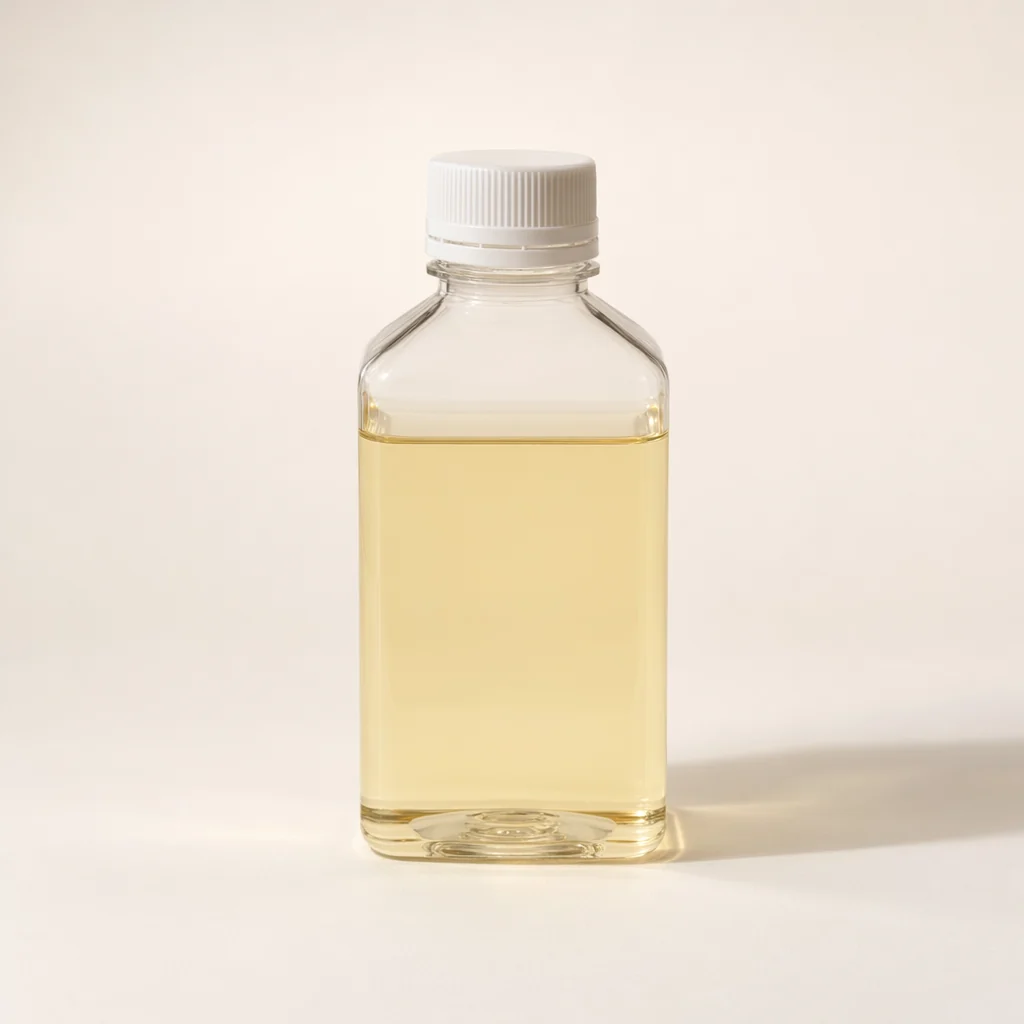
0.5 mM EDTA Solution, Calcium/Magnesium-Free
0.5 mM EDTA Solution, Calcium/Magnesium-Free is a sterile, animal origin-free cell dissociation reagent supplied without phenol red for routine cell culture workflows. CCM-RG-0010 is provided as a ready-to-use liquid in a 500 mL format for laboratories that need a non-enzymatic chelation reagent for adherent cell release, washing steps, and culture process support. It is available from CellCultureMedia with shipping quoted per order and quotation support through request a quote.
- ✓ Manufacturer base price, shipping quoted per order
- ✓ ISO-aligned manufacturing
- ✓ Certificate of Analysis on request
- ✓ Bulk & custom volumes quoted on request
Overview
CCM-RG-0010 is a 0.5 mM EDTA liquid reagent formulated without calcium ions, magnesium ions, or phenol red. EDTA supports cell detachment by chelating divalent cations that contribute to cell-to-surface and cell-to-cell adhesion. The absence of calcium and magnesium makes the solution suitable for workflows where cation-dependent adhesion needs to be reduced before passaging, harvesting, counting, or downstream culture processing. The phenol red-free format is useful where color indicator carryover is not desired in imaging, analytical readouts, or formulation-sensitive steps.
This 500 mL reagent is classified as animal origin-free and sterile-filtered, with an endotoxin specification of ≤1 EU/mL and a stated shelf life of 48 months when stored as directed. It is positioned within cell culture reagents for procurement programs that require defined dissociation reagents with clear documentation, lot traceability, and predictable supply. The product is supplied as a ready-to-use liquid, reducing in-house preparation time and helping teams standardize dissociation conditions across R&D, process development, and routine production support environments.
Applications
- Non-enzymatic dissociation support for adherent mammalian cell culture when a mild chelation step is preferred over protease-based release.
- Pre-passaging rinse or incubation step for monolayer cultures that require calcium- and magnesium-free conditions before detachment or harvest.
- Phenol red-free handling workflows where optical assays, imaging, or media formulation studies benefit from reduced color indicator carryover.
- Cell culture process development where animal origin-free ancillary reagents are specified for material control, supplier qualification, or scale-up planning.
- Preparation of cells for counting, reseeding, experimental setup, or transfer into defined media systems after appropriate validation by the user.
Storage and Handling
Store CCM-RG-0010 at 2 to 30 ℃ and protect the bottle from light. Maintain the container closed when not in use and apply aseptic technique during dispensing to preserve the sterile-filtered status of the liquid. Do not use the reagent if there is visible contamination, unexpected turbidity, container damage, or compromised closure integrity. For consistent results, bring the required aliquot to the operating temperature defined by the laboratory protocol, minimize repeated open-container exposure, and record lot number, opening date, and user-defined in-use hold time in the batch or laboratory record.
Quality and Documentation
CellCultureMedia supplies CCM-RG-0010 for research, cell culture, and bioprocessing use with specification controls suitable for B2B procurement review. Manufacturing and release practices are ISO-aligned, and lot-specific documentation can be requested through the quality documentation channel. Key release attributes include sterile-filtered liquid form, animal origin-free classification, endotoxin ≤1 EU/mL, and 48-month shelf life under the specified storage conditions. Standard 500 mL units are available at the listed price, with shipping quoted per order and support for volume forecasts, scheduled purchasing, and bulk pricing through quotation requests.
Specifications
Formulation Highlights
Contains (+)
[+]0.5mM EDTA
Does Not Contain (-)
[-]Phenol Red[-]Ca2+[-]Mg2+
Storage & Handling
Storage: 2~30 ℃, protected from light. Shelf life: 48 months. Ship cold-chain where required.
Quality & Documentation
Manufactured under ISO-aligned quality management systems. Full documentation — Certificate of Analysis (CoA), Material Safety Data Sheet (MSDS), formulation summary, and stability data — is available on request. Email [email protected] with the SKU.
About this product
What cell lines does this product support?
How is this product shipped?
Is a Certificate of Analysis available?
What is the typical lead time?
Do you offer bulk pricing?
Learn more about this
- Trypan Blue and the Dye Exclusion Viability AssayTrypan blue is a diazo dye used at 0.4% (w/v) to separate live from dead cells by dye exclusion: an intact plasma membrane keeps the charged dye out, so viable cells stay clear and refractile, while cells with a damaged membrane take the dye up and stain blue. In practice the cell suspension is mixed 1:1 with 0.4% trypan blue, loaded into a hemocytometer or an automated cell counter, and counted within 3-5 minutes to give both a cell concentration and a percent viability. Because it reports membrane integrity only, trypan blue counts cells that have already died -- it does not detect apoptotic or metabolically failing cells that still have an intact membrane, so it reads high compared with metabolic or flow-cytometry viability assays.
- Trypsin-EDTATrypsin-EDTA is a cell dissociation reagent that combines the serine protease trypsin, which cleaves peptide bonds on the C-terminal side of lysine and arginine residues in cell-surface and matrix proteins, with the chelator EDTA, which binds the calcium and magnesium ions that cell-adhesion molecules require. It is supplied in a calcium- and magnesium-free balanced salt solution, most commonly at 0.05% trypsin (0.5 g/L) for routine cell lines and 0.25% (2.5 g/L) for firmly adherent cells and primary cultures. Typical use is 2-5 minutes at 37 degrees C, followed immediately by neutralisation with serum-containing medium or a defined trypsin inhibitor.
- Subculture of Cells (Passaging)Subculture of cells, also called passaging, is the transfer of cells from a culture that is approaching confluence into fresh vessels with fresh medium so that growth can continue. Adherent cells are detached first, usually with 0.25% or 0.05% trypsin-EDTA or a non-enzymatic dissociation reagent, then reseeded at a lower density set by a split ratio such as 1:4; suspension cells are simply diluted into fresh medium without any dissociation step. Most continuous adherent cell lines are subcultured at 70-80% confluence, which normally means two or three passages per week.
- Trypsin vs Accutase: Choosing a Cell Dissociation ReagentTrypsin is a pancreatic serine protease that cleaves peptide bonds after lysine and arginine, and it detaches cells fast but indiscriminately - it must be stopped with serum or a trypsin inhibitor, and it cleaves surface proteins along with the adhesion contacts. Accutase is a proprietary mixture of proteolytic and collagenolytic enzymes from an invertebrate source, supplied in calcium- and magnesium-free DPBS with 0.5 mM EDTA; it works more slowly and gently, does not require a neutralisation step, and preserves more surface epitopes. Choose trypsin for routine passaging of robust adherent lines where speed matters and the cells go straight back into culture; choose Accutase when the harvested cells are the experiment - flow cytometry on surface markers, pluripotent stem cells, primary neurons, or any single-cell suspension where viability and phenotype must survive the harvest.