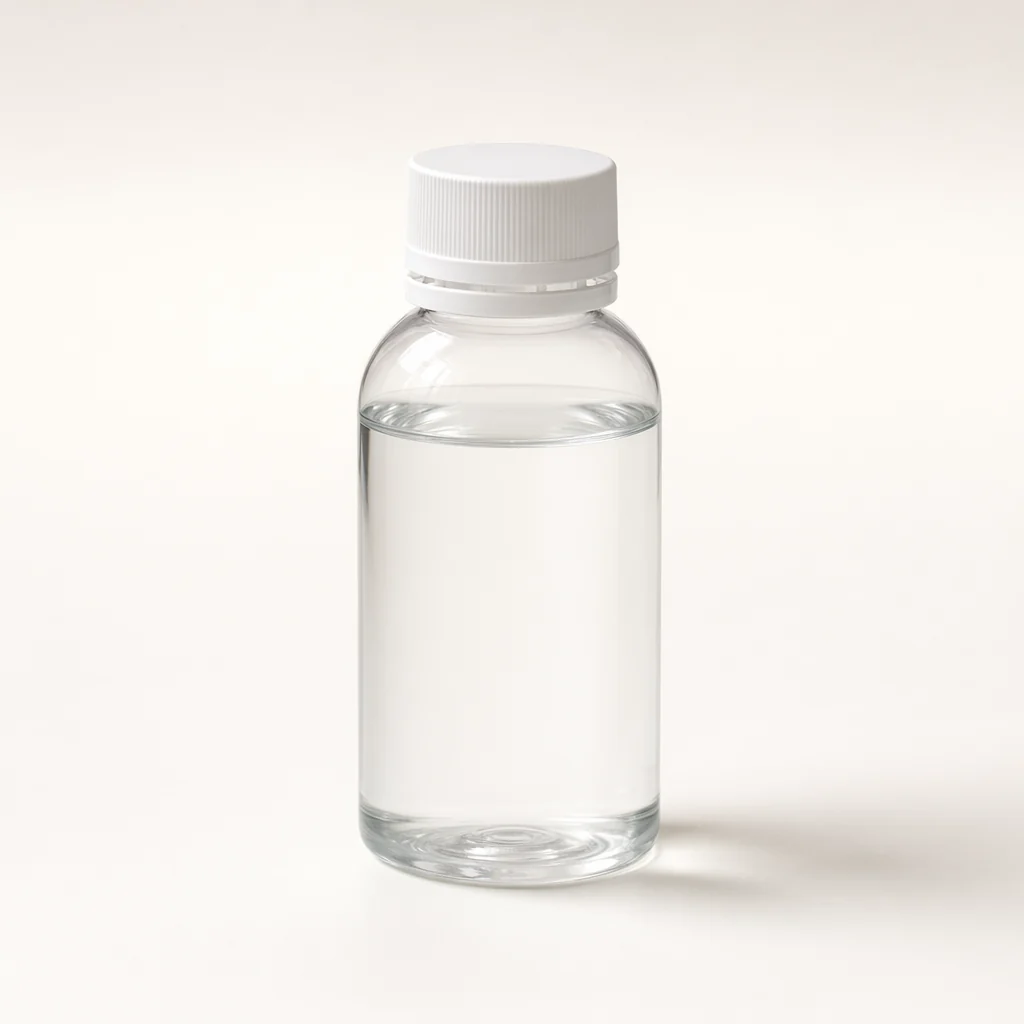
Sterile 1 M HEPES Buffer, 100 mL
CCM-RG-0001 is a sterile-filtered, animal origin-free 1 M HEPES buffer supplied as a 100 mL liquid reagent for cell culture pH stabilization. It is intended for research, development, and bioprocess workflows requiring a defined zwitterionic buffer with lot-level quality documentation. The product is stored at 2–8 °C and shipped on blue ice, with shipping quoted per order through CellCultureMedia.
- ✓ Manufacturer base price, shipping quoted per order
- ✓ ISO-aligned manufacturing
- ✓ Certificate of Analysis on request
- ✓ Bulk & custom volumes quoted on request
Overview
HEPES, or 4-(2-hydroxyethyl)-1-piperazineethanesulfonic acid, is a widely used Good's buffer selected for its useful buffering range near physiological culture pH and its low tendency to participate in many common biochemical reactions. CCM-RG-0001 is supplied as a 1 M ready-to-use liquid concentrate for dilution into cell culture media, balanced salt solutions, and process buffers when additional pH control is required outside standard bicarbonate buffering systems.
This 100 mL format is designed for laboratories and process development groups that need a sterile, animal origin-free buffer with defined release specifications. The product is sterile-filtered, with pH specified at 7.2–7.5, osmolality at 1200–2020 mOsmol/kg, and endotoxin controlled to ≤1 EU/mL. As part of our cell culture reagents portfolio, it supports consistent procurement for R&D, upstream process development, analytical support, and academic core facilities.
Applications
- Supplementing mammalian cell culture media where additional buffering capacity is needed during incubator handling, bench work, imaging, sampling, or transport between instruments.
- Formulating research buffers, wash solutions, and assay support reagents that require a 1 M HEPES stock with sterile-filtered quality and animal origin-free classification.
- Supporting process development studies in which pH drift, CO2 exposure, or open handling time must be managed through a chemically defined buffer component.
- Use in suspension or adherent culture workflows after appropriate dilution, qualification, and compatibility testing by the end user.
- Standardizing reagent sourcing for laboratories that require lot traceability, controlled endotoxin, and documented pH and osmolality specifications.
Storage and Handling
Store CCM-RG-0001 at 2–8 °C and protect the container from unnecessary warming, contamination, and repeated open handling. The product is supplied as a sterile liquid and should be handled using aseptic technique after opening; do not use if the container seal is compromised, the solution shows unexpected turbidity, or the material has been stored outside validated conditions. Shelf life is 24 months when stored unopened under recommended conditions. Shipments are packed on blue ice to maintain refrigerated transit conditions, and receiving teams should transfer units to controlled 2–8 °C storage promptly upon arrival.
Quality and Documentation
CellCultureMedia supplies CCM-RG-0001 for professional research and bioprocessing environments that require consistent specifications and procurement-ready documentation. Manufacturing and release controls are ISO-aligned, with sterility, endotoxin, pH, osmolality, appearance, labeling, and shelf-life attributes managed through quality procedures. A lot-specific Certificate of Analysis can be requested through our quality documentation process. For standing orders, multi-pack requirements, or annual demand planning, submit details through request a quote. Shipping is quoted per order and destination; wholesale quantities ship most economically.
Specifications
Storage & Handling
Storage: 2–8 ℃. Shelf life: 24 months. Ship cold-chain where required.
Quality & Documentation
Manufactured under ISO-aligned quality management systems. Full documentation — Certificate of Analysis (CoA), Material Safety Data Sheet (MSDS), formulation summary, and stability data — is available on request. Email [email protected] with the SKU.
About this product
What cell lines does this product support?
How is this product shipped?
Is a Certificate of Analysis available?
What is the typical lead time?
Do you offer bulk pricing?
Learn more about this
- HEPES buffer in cell cultureHEPES (4-(2-hydroxyethyl)-1-piperazineethanesulfonic acid) is a zwitterionic organic buffer used in cell culture to hold medium at physiological pH without depending on incubator CO2. Its pKa is about 7.5 at 20-25 degrees C and about 7.3 at 37 degrees C, giving useful buffering across roughly pH 6.8-8.2, and it is normally added to medium at 10-25 mM from a sterile 1 M stock. Because HEPES buffering does not rely on the carbonic acid/bicarbonate equilibrium, HEPES-supplemented medium resists the fast alkaline drift that occurs when a flask leaves a 5% CO2 incubator.
- HBSS (Hank's Balanced Salt Solution)HBSS (Hank's Balanced Salt Solution) is an isotonic balanced salt solution used to wash cells, transport tissue, dilute reagents and hold cells briefly outside their growth medium. It contains 8.0 g/L sodium chloride, 1.0 g/L D-glucose, phosphate and 350 mg/L sodium bicarbonate, and is supplied either with calcium and magnesium (1.26 mM Ca, ~0.9 mM Mg total) or without them. Its low bicarbonate means it is designed for use at atmospheric CO2 or in sealed vessels, not for prolonged culture in a 5% CO2 incubator.
- Endotoxin Testing in Cell CultureEndotoxin testing measures bacterial lipopolysaccharide (LPS) in laboratory water, media, sera and reagents, reported in endotoxin units per millilitre (EU/mL), where 1 EU corresponds to roughly 0.1–0.2 ng of reference-standard E. coli endotoxin. The compendial methods are the LAL (limulus amebocyte lysate) assay in its gel-clot, turbidimetric and chromogenic forms under USP <85>, and the animal-free recombinant Factor C (rFC) assay under USP <86>; kinetic formats quantify down to about 0.001–0.005 EU/mL. Practical cell-culture limits are 0.25 EU/mL for water, ≤1 EU/mL for most cell-culture-grade reagents, and ≤10 EU/mL as the general industry standard for fetal bovine serum, with low-endotoxin grades at ≤1 EU/mL and ultra-low grades below 0.1 EU/mL. Endotoxin survives autoclaving and passes 0.2 µm filters, so it must be excluded at source rather than removed later.
- Cell culture buffersCell culture buffers hold medium in the pH 7.2-7.4 range that mammalian cells require, against the acid load cells generate as they metabolise. The default system in almost every classical medium is sodium bicarbonate working with the CO2 in the incubator atmosphere, which is why bicarbonate content must be matched to the incubator setting: about 1.5-2.2 g/L NaHCO3 for 5% CO2 and 3.7 g/L for 10% CO2. Organic buffers such as HEPES (pKa 7.48) are added at 10-25 mM to hold pH when cultures are outside a CO2 atmosphere, while phosphate-buffered solutions such as PBS and DPBS are used for washing and short-term handling rather than for growth.