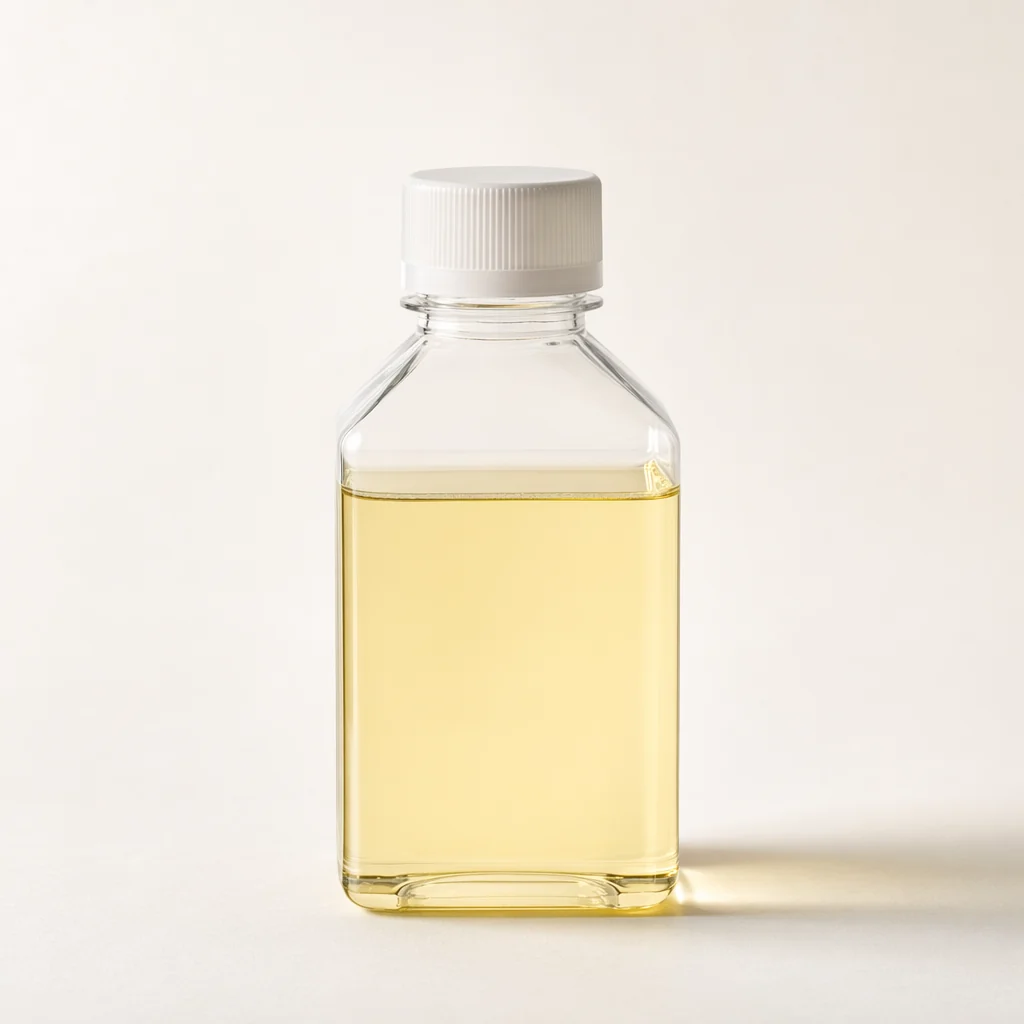
Calcium- and Magnesium-Free DPBS, No Phenol Red
Calcium- and magnesium-free DPBS without phenol red is a sterile balanced salt solution for cell washing, rinsing, dilution, and short-term handling in cell culture workflows. Supplied as a 500 mL liquid reagent under CCM-RG-0003, it is animal-origin-free, filter sterilized, and specified for pH 7.0-7.4 and osmolality 270-300 mOsmol/kg. The formulation excludes Ca2+, Mg2+, and phenol red to support protocols where divalent cations or indicator dye may interfere. Shipping is quoted per order and destination; wholesale quantities ship most economically.
- ✓ Manufacturer base price, shipping quoted per order
- ✓ ISO-aligned manufacturing
- ✓ Certificate of Analysis on request
- ✓ Bulk & custom volumes quoted on request
Overview
CCM-RG-0003 is a Dulbecco’s phosphate-buffered saline formulation supplied without calcium ions, magnesium ions, or phenol red. It is categorized as a balanced salt solution within cell culture reagents and is intended for routine research, development, and bioprocess support environments that require a defined, ready-to-use liquid buffer. The absence of Ca2+ and Mg2+ is useful when a protocol requires reduced cell-to-cell adhesion support before dissociation or when divalent cations may affect downstream reagent performance. The absence of phenol red also reduces background color and avoids pH indicator interference in assays or imaging-adjacent preparation steps.
The product is manufactured as an animal-origin-free liquid reagent and filter sterilized for cell culture use. Key release specifications include pH 7.0-7.4, osmolality 270-300 mOsmol/kg, endotoxin not more than 1 EU/mL, and a stated shelf life of 48 months when stored as directed. The 500 mL bottle format supports laboratory-scale consumption, media preparation support, and standardized wash steps in R&D or process development labs. For procurement planning, the listed unit price is $9.44, with quotation support available through request quote for volume requirements, standing orders, or consolidated sourcing.
Applications
- Rinsing adherent cell monolayers before dissociation, passaging, or reagent exchange where calcium- and magnesium-free conditions are preferred.
- Washing suspension cells by centrifugation and resuspension in a physiologically balanced phosphate-buffered salt solution.
- Diluting compatible cell culture reagents, concentrated supplements, or process intermediates where a clear, phenol-red-free buffer is required.
- Short-duration handling of mammalian cells during counting, sampling, transfer, or analytical preparation steps outside complete growth medium.
- Preparation of control wells, blank solutions, and wash steps in workflows where phenol red absorbance or color may complicate visual or instrumental readout.
- Supporting upstream bioprocess development, academic cell culture laboratories, and quality-controlled reagent standardization across multiple users or sites.
Storage and Handling
Store CCM-RG-0003 at 2-30 °C, protected from light. The product ships at ambient temperature, consistent with the specified storage range, and should be inspected on receipt for container integrity, clarity, labeling, and lot information before release into laboratory inventory. Keep the bottle closed when not in use and apply aseptic technique during dispensing to maintain sterility after opening. Do not use the reagent if visible contamination, unexpected turbidity, leakage, or a compromised closure is observed. Rotate inventory by expiration date and record lot numbers in batch records, laboratory notebooks, or electronic inventory systems as appropriate for traceability.
Quality and Documentation
CellCultureMedia supplies CCM-RG-0003 for research and bioprocessing customers that require specification-driven sourcing, lot traceability, and responsive documentation. Production is performed under ISO-aligned quality practices, with release testing aligned to the stated sterility, endotoxin, pH, osmolality, appearance, and shelf-life specifications. A Certificate of Analysis is available on request, and additional procurement documentation can be coordinated through the CellCultureMedia team. Quality program information is available at quality. Shipping is quoted per order and destination.
Specifications
Formulation Highlights
Does Not Contain (-)
Phenol red, Ca 2+, Mg 2+
Storage & Handling
Storage: 2~30 ℃, protected from light. Shelf life: 48 months. Ship cold-chain where required.
Quality & Documentation
Manufactured under ISO-aligned quality management systems. Full documentation — Certificate of Analysis (CoA), Material Safety Data Sheet (MSDS), formulation summary, and stability data — is available on request. Email [email protected] with the SKU.
About this product
What cell lines does this product support?
How is this product shipped?
Is a Certificate of Analysis available?
What is the typical lead time?
Do you offer bulk pricing?
Learn more about this
- Cell Culture ContaminationCell culture contamination falls into six categories: bacteria, yeast, filamentous fungi and moulds, mycoplasma, viruses, and cross-contamination by another cell line. Bacteria, yeast and fungi announce themselves within one to five days through turbidity, a pH shift or visible particles under the microscope, and are handled by discarding the culture and finding the technique failure that let them in. Mycoplasma, viral contamination and cell line misidentification produce no visible change at all and are found only by testing — PCR or DNA stain for mycoplasma, STR profiling for identity. The correct response to any confirmed biological contamination is to discard the affected culture, decontaminate the incubator, and restart from a clean frozen stock.
- Counting Cells with a HemocytometerA hemocytometer is a thick glass slide bearing a precisely etched grid over which a coverslip creates a chamber exactly 0.1 mm deep, so that a known volume of cell suspension can be counted under a microscope and converted to a concentration. For mammalian cells you count the four 1 mm2 corner squares, take the mean, multiply by the dilution factor, and multiply by 10^4 to obtain cells per mL, because each corner square encloses exactly 10^-4 mL. Mixing the sample 1:1 with 0.4% trypan blue before loading gives a viability percentage from the same count, since only dead cells with compromised membranes take up the dye.
- HBSS (Hank's Balanced Salt Solution)HBSS (Hank's Balanced Salt Solution) is an isotonic balanced salt solution used to wash cells, transport tissue, dilute reagents and hold cells briefly outside their growth medium. It contains 8.0 g/L sodium chloride, 1.0 g/L D-glucose, phosphate and 350 mg/L sodium bicarbonate, and is supplied either with calcium and magnesium (1.26 mM Ca, ~0.9 mM Mg total) or without them. Its low bicarbonate means it is designed for use at atmospheric CO2 or in sealed vessels, not for prolonged culture in a 5% CO2 incubator.
- Trypan Blue and the Dye Exclusion Viability AssayTrypan blue is a diazo dye used at 0.4% (w/v) to separate live from dead cells by dye exclusion: an intact plasma membrane keeps the charged dye out, so viable cells stay clear and refractile, while cells with a damaged membrane take the dye up and stain blue. In practice the cell suspension is mixed 1:1 with 0.4% trypan blue, loaded into a hemocytometer or an automated cell counter, and counted within 3-5 minutes to give both a cell concentration and a percent viability. Because it reports membrane integrity only, trypan blue counts cells that have already died -- it does not detect apoptotic or metabolically failing cells that still have an intact membrane, so it reads high compared with metabolic or flow-cytometry viability assays.
- ACK lysis bufferACK (Ammonium-Chloride-Potassium) lysis buffer is an isotonic ammonium chloride solution used to remove red blood cells from leukocyte preparations such as mouse spleen, bone marrow and buffy coat. The standard composition is 150 mM ammonium chloride (8.02 g/L NH4Cl), 10 mM potassium bicarbonate (1.0 g/L KHCO3) and 0.1 mM disodium EDTA, adjusted to pH 7.2-7.4. Red cells lyse osmotically within one to five minutes at room temperature because their band 3 anion exchanger and high carbonic anhydrase activity drive ammonium chloride and water into the cell, while leukocytes, which lack that transport capacity, survive.
- Trypsin-EDTATrypsin-EDTA is a cell dissociation reagent that combines the serine protease trypsin, which cleaves peptide bonds on the C-terminal side of lysine and arginine residues in cell-surface and matrix proteins, with the chelator EDTA, which binds the calcium and magnesium ions that cell-adhesion molecules require. It is supplied in a calcium- and magnesium-free balanced salt solution, most commonly at 0.05% trypsin (0.5 g/L) for routine cell lines and 0.25% (2.5 g/L) for firmly adherent cells and primary cultures. Typical use is 2-5 minutes at 37 degrees C, followed immediately by neutralisation with serum-containing medium or a defined trypsin inhibitor.
- PBS vs DPBS: What Is Different, and Which One to UsePBS and DPBS are both phosphate-buffered saline solutions; the difference is the recipe, not the function. Dulbecco's formulation (DPBS) adds potassium chloride and carries roughly twice the phosphate of a typical PBS (about 9.5 mM versus about 4 mM), and it is sold in two versions - with calcium and magnesium, and without. In practice the with-or-without-divalent-cations choice matters far more than the PBS-or-DPBS label: use a calcium- and magnesium-free solution to wash cells before trypsinisation or EDTA dissociation, because Ca2+ and Mg2+ support the cadherin and integrin bonds you are about to break, and use the version containing calcium and magnesium when cells must stay attached and intact through the wash.
- Iodixanol as a Density Gradient MediumIodixanol is a non-ionic, water-soluble iodinated compound used as a density gradient medium, supplied as a sterile 60% (w/v) solution with a density of 1.32 g/mL. Its defining advantage is that it is iso-osmotic across the whole useful density range -- a 60% solution has an osmolality of approximately 290 mOsm/kg -- so cells, organelles, viruses and extracellular vesicles can be banded at high density without the osmotic dehydration caused by sucrose or the high ionic strength of caesium chloride. It is the standard medium for laboratory-scale AAV purification, where a four-step gradient of 15%, 25%, 40% and 60% separates genome-containing capsids at the 40-60% interface, and it is also widely used for cell separation, organelle fractionation and extracellular vesicle flotation.
- DF-1 Chicken Embryo Fibroblast CellsDF-1 (UMNSAH/DF-1, ATCC CRL-12203) is a spontaneously immortalised chicken embryo fibroblast line derived from East Lansing Line 0 embryos, a chicken line free of endogenous avian leukosis virus loci. Because it carries no endogenous retrovirus and was immortalised without viral or chemical transformation, it is the standard continuous substitute for primary chicken embryo fibroblasts in avian virology, vaccine development and recombinant virus production. DF-1 cells are cultured in high-glucose DMEM with 10% fetal bovine serum at 37 C in 5% CO2, grow faster than primary CEF, transfect efficiently, and support replication of avian influenza, infectious bursal disease virus, avian leukosis and sarcoma viruses and many other avian pathogens at titres equal to or higher than CEF.
- Subculture of Cells (Passaging)Subculture of cells, also called passaging, is the transfer of cells from a culture that is approaching confluence into fresh vessels with fresh medium so that growth can continue. Adherent cells are detached first, usually with 0.25% or 0.05% trypsin-EDTA or a non-enzymatic dissociation reagent, then reseeded at a lower density set by a split ratio such as 1:4; suspension cells are simply diluted into fresh medium without any dissociation step. Most continuous adherent cell lines are subcultured at 70-80% confluence, which normally means two or three passages per week.
- Cell culture buffersCell culture buffers hold medium in the pH 7.2-7.4 range that mammalian cells require, against the acid load cells generate as they metabolise. The default system in almost every classical medium is sodium bicarbonate working with the CO2 in the incubator atmosphere, which is why bicarbonate content must be matched to the incubator setting: about 1.5-2.2 g/L NaHCO3 for 5% CO2 and 3.7 g/L for 10% CO2. Organic buffers such as HEPES (pKa 7.48) are added at 10-25 mM to hold pH when cultures are outside a CO2 atmosphere, while phosphate-buffered solutions such as PBS and DPBS are used for washing and short-term handling rather than for growth.
- Freezing Medium for Cells and Cryopreservation ProtocolsCell freezing medium is a cryoprotectant-containing solution that allows cells to survive freezing and long-term storage, most commonly built from a base medium or serum plus 5-10% dimethyl sulfoxide (DMSO), with 10% the standard starting point. DMSO permeates the cell and modifies how water freezes, preventing the intracellular ice crystals that otherwise rupture membranes during cooling. Cells are frozen at a controlled rate of approximately 1 C per minute to -80 C and then transferred to the vapour phase of liquid nitrogen, since long-term storage requires temperatures below about -135 C to prevent ice recrystallisation. Thawing is the opposite -- as rapid as possible in a 37 C water bath, followed by prompt dilution to remove the DMSO, which is toxic to cells above freezing temperatures.
- Trypsin vs Accutase: Choosing a Cell Dissociation ReagentTrypsin is a pancreatic serine protease that cleaves peptide bonds after lysine and arginine, and it detaches cells fast but indiscriminately - it must be stopped with serum or a trypsin inhibitor, and it cleaves surface proteins along with the adhesion contacts. Accutase is a proprietary mixture of proteolytic and collagenolytic enzymes from an invertebrate source, supplied in calcium- and magnesium-free DPBS with 0.5 mM EDTA; it works more slowly and gently, does not require a neutralisation step, and preserves more surface epitopes. Choose trypsin for routine passaging of robust adherent lines where speed matters and the cells go straight back into culture; choose Accutase when the harvested cells are the experiment - flow cytometry on surface markers, pluripotent stem cells, primary neurons, or any single-cell suspension where viability and phenotype must survive the harvest.
- Poly-L-Lysine Coating for Cell CulturePoly-L-lysine coating covers a culture surface with a positively charged synthetic polymer that binds the negatively charged plasma membrane, allowing weakly adherent cells to attach to glass or plastic. The standard protocol applies a sterile 0.01% (0.1 mg/mL) solution at roughly 1 mL per 25 cm2, leaves it in contact with the surface for 5 minutes to 1 hour at room temperature, aspirates, rinses thoroughly with sterile tissue-culture-grade water, and air-dries the surface for at least 2 hours before cells are seeded. The attachment it provides is purely electrostatic: poly-L-lysine does not engage integrins, so cells that need genuine extracellular matrix signalling require laminin, fibronectin or collagen instead of it or on top of it.