Cell Culture Media for Monoclonal Antibody Production
At day 14 of a CHO fed-batch run, a useful medium is judged by measured output, not by catalog wording: 3.2-5.8 g/L IgG, harvest viability above 82%, and lactate kept below 2.8 g/L after the production peak. This application page covers cell culture media for monoclonal antibody production across seed train, inoculation, and 12-16 day fed-batch production using CHO-K1 (ATCC CCL-61), CHO-DG44, CHO-S, and hybridoma fusion lines.
Process context — where in the bioprocess this fits
Monoclonal antibody production media have to support two different jobs in the same process: rapid expansion through the seed train, then controlled metabolism in production culture.
For CHO-K1 (ATCC CCL-61), CHO-DG44, and CHO-S suspension processes, our usual recommendation is a chemically defined, animal-component-free basal medium paired with concentrated feeds from day 3 through day 12. The basal medium is released with pH 7.21, specification 7.00-7.40, osmolality 312 mOsmol/kg, specification 260-320 mOsmol/kg, endotoxin ≤0.25 EU/mL by LAL, mycoplasma not detected by qPCR, and USP <71> sterility pass.
Hybridoma fusion lines are handled differently. They often tolerate serum-free transition more slowly, so we usually start with a hybridoma serum-free medium plus 2-4 mM L-glutamine equivalent and then reduce serum carryover over two passages.
Fed-batch behavior is strongly shaped by amino acid and glucose feeding. In CHO processes, excessive osmolality above 380 mOsmol/kg can raise qP in some clones while reducing integrated viable cell density, so medium selection should be tied to clone metabolism, not only to peak viable cell density [1] Zhang X et al. Biotechnol Bioeng 2015;112(7):1418-1429. doi:10.1002/bit.25554.
What mAb production media needs to do (pH, osm, glucose, glutamine, lactate tolerance)
The medium must keep the culture productive after the growth phase slows.
| Parameter | Working target | Why it matters |
|---|---|---|
| pH at release | 7.20-7.30, typical lot 7.21 | Reduces inoculation shock and supports CO2-controlled production pH of 6.95-7.15 |
| Osmolality | 290-330 mOsmol/kg basal, <380 mOsmol/kg after feed | Protects viability while allowing concentrated nutrient delivery |
| Glucose strategy | 4.0-6.0 g/L at inoculation, 1.0-4.0 g/L during fed-batch | Limits starvation and avoids high lactate accumulation |
| Glutamine equivalent | 2-6 mM process-dependent | Supports growth without driving ammonia above 4 mM |
| Lactate tolerance | Maintain <3.0 g/L after day 8 | Improves late-stage viability and harvest clarity |
For release testing, the standard CHO serum-free production lot includes growth promotion in CHO-K1 (ATCC CCL-61): 95.8% viability at 96 h, 2.7 × 10^6 cells/mL, and doubling time of 22.4 h in shake flask screening. A parallel HEK293T (ATCC CRL-3216) permissive-cell check is used on selected supplement lots, with 96.3% viability at 96 h.
Published fed-batch studies show that glucose and amino acid feed timing can move antibody titer by more than 30% without a clone change [2] Li F et al. Biotechnol Prog 2012;28(3):682-690. doi:10.1002/btpr.1533.
Our recommended set, ranked by titer/viability
For a new CHO mAb program, start with the high-viability option first, then screen the higher-qP feed if the clone already reaches strong viable cell density.
| Rank | Recommended medium set | Best fit | Typical 14-day outcome |
|---|---|---|---|
| 1 | CCM CHO-CD Fed-Batch Base + CHO Feed A/B | CHO-K1 (ATCC CCL-61), CHO-DG44, CHO-S | 4.6-5.8 g/L titer, 84-91% harvest viability, peak VCD 15-22 × 10^6 cells/mL, qP 28-41 pg/cell/day |
| 2 | CCM CHO ADCF High-Density Medium + concentrated feed | High-density suspension seed train and production | 3.8-5.2 g/L titer, 82-88% harvest viability, peak VCD 18-26 × 10^6 cells/mL, qP 20-34 pg/cell/day |
| 3 | CCM CHO Serum-Free Transition Medium | Serum-reduction projects and early clone adaptation | 2.1-3.6 g/L titer, 78-86% harvest viability, peak VCD 8-14 × 10^6 cells/mL, qP 18-29 pg/cell/day |
| 4 | CCM Hybridoma SFM + supplement pack | Hybridoma fusion lines and antibody screening cultures | 80-450 mg/L antibody, 80-90% viability at harvest, passage stability over 6 passages |
Ranking is based on fed-batch productivity first, then harvest viability. If your downstream team is sensitive to host-cell protein, DNA burden, or filter load, the highest titer condition may not be the lowest-cost condition.
In our pilot screening, a CHO-K1 (ATCC CCL-61) IgG1 model reached 5.4 g/L on the ranked first set, with 88.6% viability at day 14 and peak VCD of 19.7 × 10^6 cells/mL. The same clone in the transition medium reached 3.0 g/L, but gave easier adaptation from serum-containing stock cultures.
Case study with measured numbers
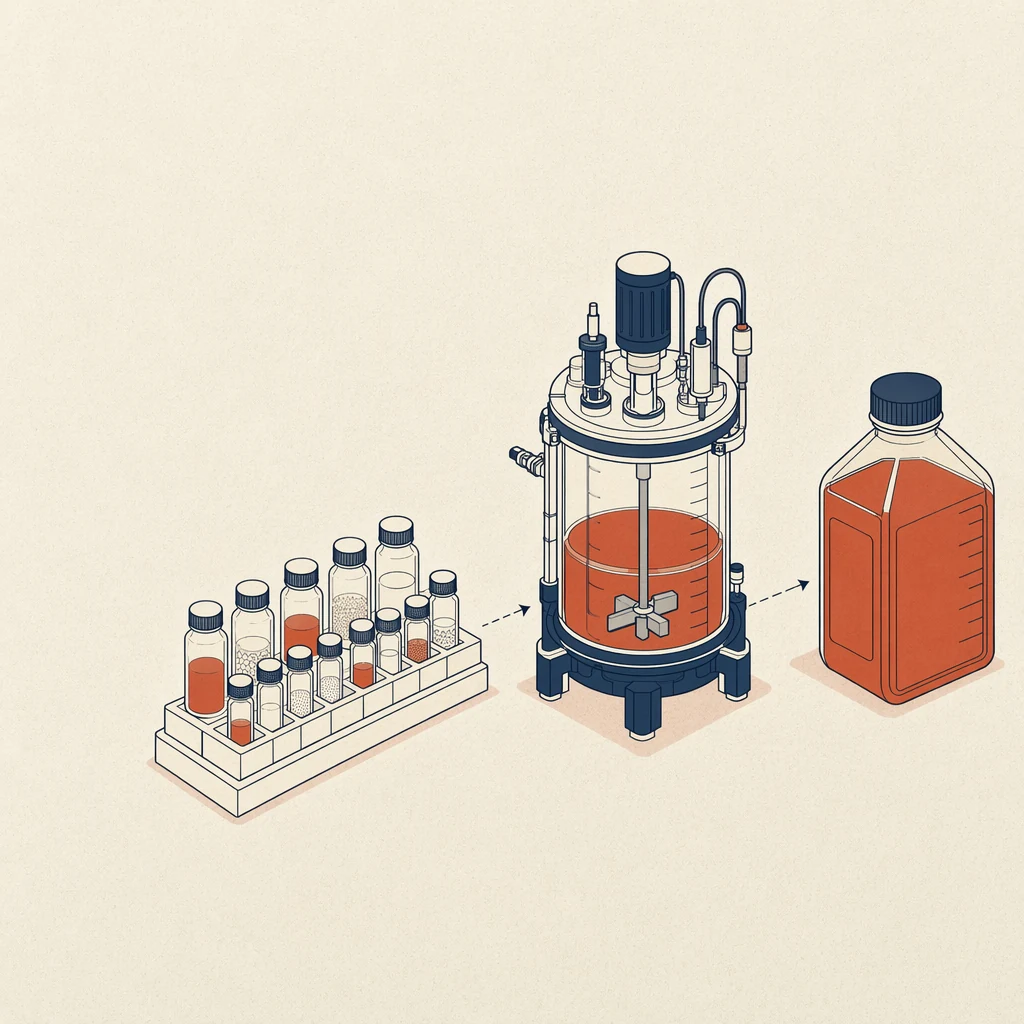
A 2 L stirred-tank study was run with a CHO-K1 (ATCC CCL-61) IgG1 producer, inoculated at 0.45 × 10^6 cells/mL in CCM CHO-CD Fed-Batch Base. The culture used 37 °C growth phase, temperature shift to 33 °C on day 5, dissolved oxygen at 40%, and feed additions on days 3, 5, 7, 9, and 11.
| Day | VCD | Viability | Glucose | Lactate | IgG titer |
|---|---|---|---|---|---|
| 3 | 3.8 × 10^6 cells/mL | 97.2% | 2.4 g/L | 1.1 g/L | 0.18 g/L |
| 7 | 14.9 × 10^6 cells/mL | 95.1% | 1.8 g/L | 2.6 g/L | 1.92 g/L |
| 10 | 20.6 × 10^6 cells/mL | 91.4% | 2.1 g/L | 2.2 g/L | 3.84 g/L |
| 14 | 12.2 × 10^6 cells/mL | 88.6% | 1.5 g/L | 1.7 g/L | 5.42 g/L |
The calculated qP from day 7 to day 14 was 36 pg/cell/day. Harvest osmolality was 356 mOsmol/kg, and final pH before clarification was 7.04.
This is the profile we prefer for procurement qualification: no glucose crash, lactate consumption after mid-run, and viability above 85% at harvest. Similar lactate-shift behavior has been associated with improved fed-batch productivity in CHO mAb cultures [3] Wahrheit J et al. J Biotechnol 2014;172:82-94. doi:10.1016/j.jbiotec.2013.12.008.
Procurement notes
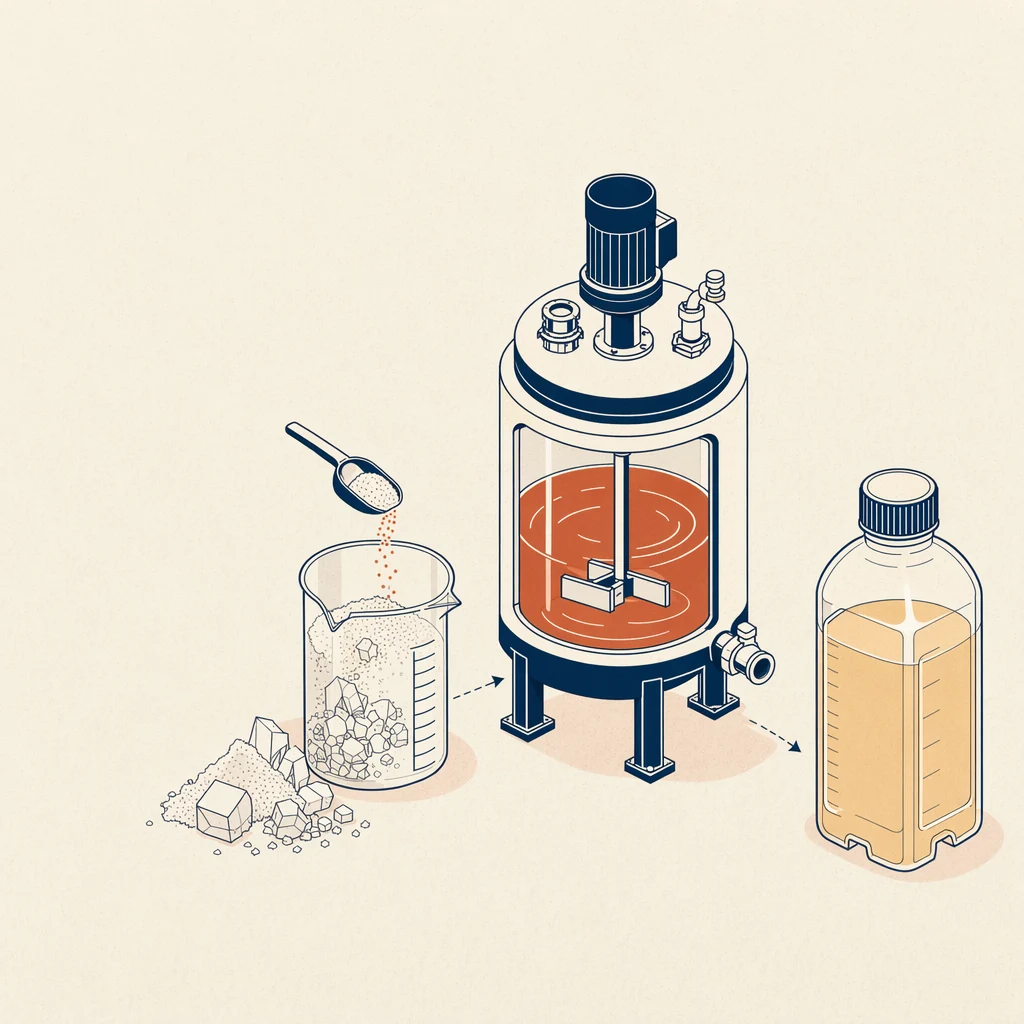
For early screening, request 500 mL or 1 L bottles of basal medium plus matching feed concentrates. For process confirmation, most buyers move to 10 L, 20 L, or 50 L packs with a lot-specific certificate of analysis.
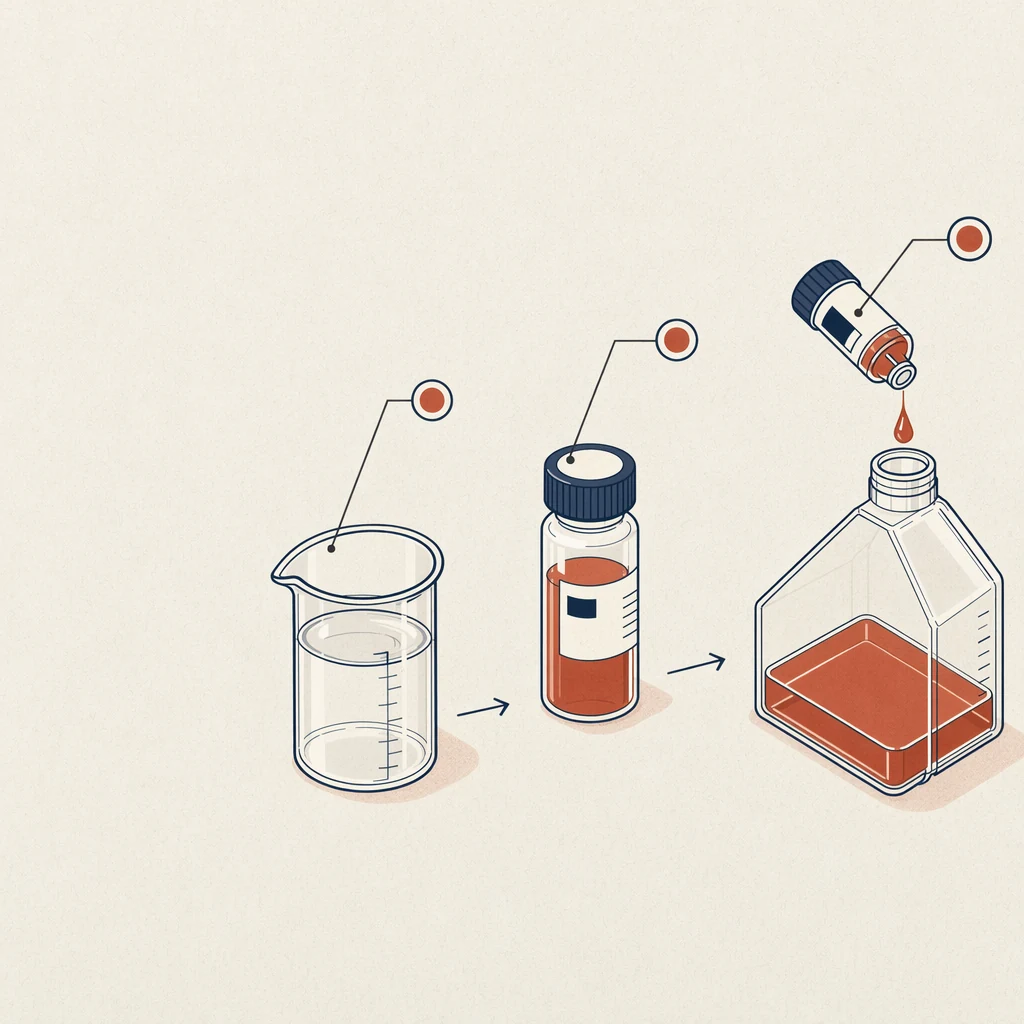
- Recommended starting order: 2 × 1 L CCM CHO-CD Fed-Batch Base, 1 × 250 mL CHO Feed A, 1 × 250 mL CHO Feed B, and 1 × 100 mL productivity supplement.
- Release packet: pH, osmolality, endotoxin, sterility, mycoplasma qPCR, appearance, and growth promotion.
- Small badge: shipping quoted per order
- Cold-chain recommendation: 2-8 °C for liquid basal medium, protect from light, do not freeze.
Ask for a lot reservation if your campaign uses more than 100 L of basal medium or if clone selection is still active. We can reserve matched basal and feed lots for 60-120 days, depending on pack size and manufacturing schedule.
Typical lead time is 3-7 business days for stocked research packs and 2-5 weeks for configured bulk packs. Bulk release can include an additional 14-day cell growth promotion readout in CHO-K1 (ATCC CCL-61) when requested before filling.
References
[1] Zhang X et al. Biotechnol Bioeng 2015;112(7):1418-1429. doi:10.1002/bit.25554.
[2] Li F et al. Biotechnol Prog 2012;28(3):682-690. doi:10.1002/btpr.1533.
[3] Wahrheit J et al. J Biotechnol 2014;172:82-94. doi:10.1016/j.jbiotec.2013.12.008.
[4] Kim JY et al. MAbs 2012;4(4):466-479. doi:10.4161/mabs.20432.
Recommended Categories
For monoclonal antibody production workflows, customers most often need media and reagents from these categories. Each ships free worldwide.
Common questions about monoclonal antibody production
How should we screen medium for a CHO-K1 IgG clone before a 2 L fed-batch run?
What release specifications should procurement request for CHO production medium?
When is hybridoma serum-free medium a better choice than CHO chemically defined medium?
Discuss your monoclonal antibody production requirements
Tell us about your cell line, target scale, and regulatory context. We will recommend specific products, share documentation, and quote pricing.
Request a Quote