Xeno-Free Serum Replacement for Hematopoietic Stem Cells
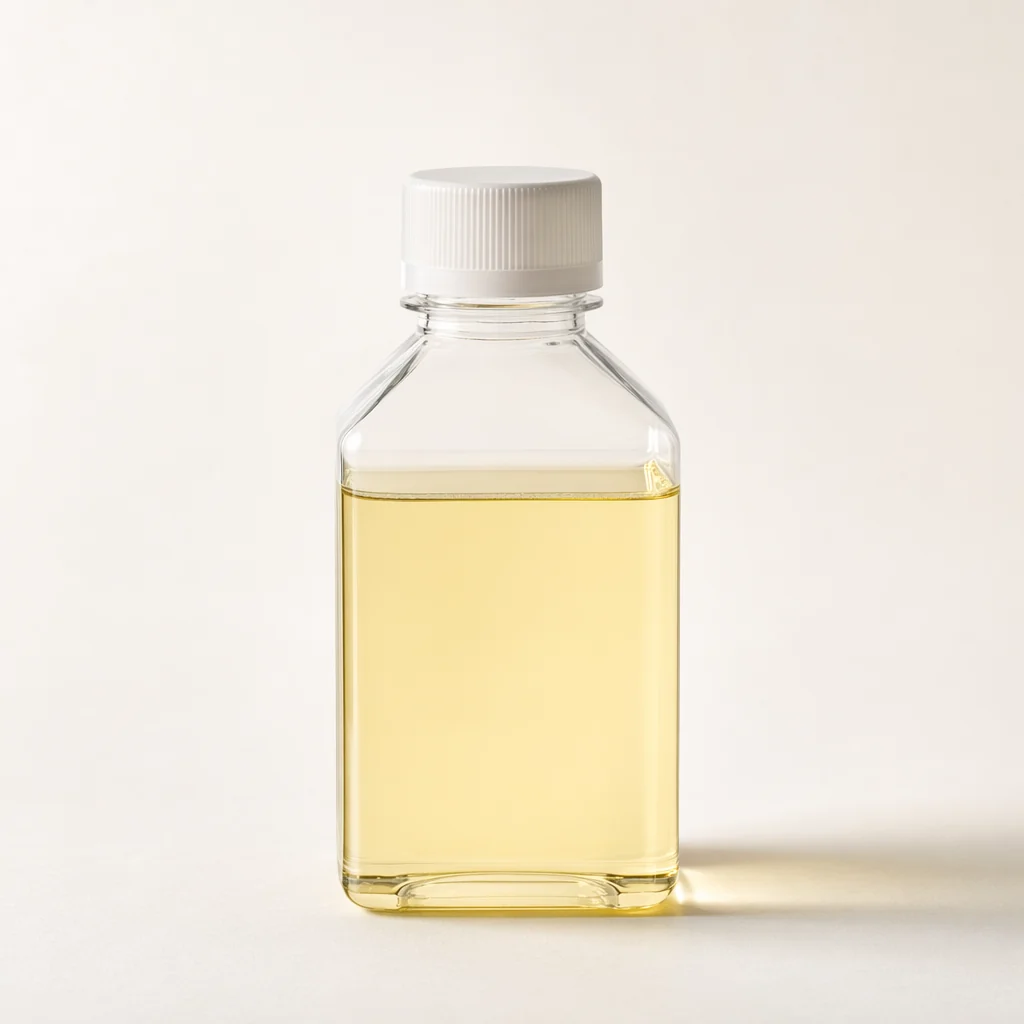
CCM-RG-0077 is a xeno-free liquid serum replacement designed as a cell culture supplement for hematopoietic stem cell workflows. Supplied in a 100 mL format, it provides a defined alternative to conventional serum-containing supplementation where animal-origin variability is not desired. The product is filter sterilized, specified for endotoxin at ≤3 EU/mL, and controlled for pH 7.0–8.0 and osmolality 280–340 mOsmol/kg. It ships on dry ice with shipping quoted per order.
- ✓ Manufacturer base price, shipping quoted per order
- ✓ ISO-aligned manufacturing
- ✓ Certificate of Analysis on request
- ✓ Bulk & custom volumes quoted on request
Overview
CCM-RG-0077 is a liquid, xeno-free serum replacement for hematopoietic stem cell culture systems and related cell culture reagent workflows. It is intended for R&D, process development, and bioprocessing teams that require a consistent supplement format without reliance on conventional serum lots. The formulation is supplied as a ready-to-use cell culture additive and is categorized under cell culture reagents for procurement alignment, inventory planning, and protocol standardization.
Key release specifications include filter sterilization, endotoxin ≤3 EU/mL, pH 7.0–8.0, and osmolality of 280–340 mOsmol/kg. These parameters support compatibility screening in serum-reduced or serum-replacement culture formats where lot consistency, ionic balance, and bioburden control are important. The 100 mL pack size is suitable for feasibility studies, media optimization, scale-down process models, and controlled comparison against existing supplement strategies. The listed unit price is USD 277.78 for CCM-RG-0077.
Applications
- Supplementation of hematopoietic stem cell culture media in xeno-free research and process development workflows.
- Evaluation of serum replacement strategies where animal-origin components are being reduced or removed from the culture system.
- Media optimization studies requiring controlled pH, osmolality, sterility, and endotoxin specifications.
- Small-scale expansion, maintenance, and assay preparation workflows involving hematopoietic stem cell populations.
- Comparability studies across serum-containing, serum-reduced, and serum-replacement formulations for upstream cell culture development.
- Procurement programs that require documented reagent specifications, defined storage conditions, and stable long-term inventory planning.
Storage and Handling
Store CCM-RG-0077 at -30 to -5 °C protected from light. The stated shelf life is 36 months when the product is maintained under the recommended frozen storage conditions and handled using appropriate aseptic technique after thawing. Shipments are dispatched on dry ice to maintain frozen temperature control during transit. Avoid repeated freeze-thaw cycles where possible; for frequent use, aliquot into sterile, compatible containers under controlled conditions and return unused aliquots to the recommended storage range promptly. Confirm suitability in the end user’s complete medium, cell source, seeding density, and culture schedule before routine adoption.
Quality and Documentation
CellCultureMedia supplies CCM-RG-0077 for research, development, and bioprocessing use with specification-focused documentation to support supplier qualification. Manufacturing and release controls are ISO-aligned, with attention to sterility, endotoxin, pH, osmolality, labeling, and cold-chain handling. A Certificate of Analysis is available on request through our quality documentation team, and procurement teams can request lot-specific documentation before shipment where required. For volume requirements, standing orders, or project-based sourcing, submit details through request a quote. Shipping is quoted per order and destination; wholesale quantities ship most economically.
Specifications
Storage & Handling
Storage: -30~-5 ℃, protected from light. Shelf life: 36 months. Ship cold-chain where required.
Quality & Documentation
Manufactured under ISO-aligned quality management systems. Full documentation — Certificate of Analysis (CoA), Material Safety Data Sheet (MSDS), formulation summary, and stability data — is available on request. Email [email protected] with the SKU.
About this product
What cell lines does this product support?
How is this product shipped?
Is a Certificate of Analysis available?
What is the typical lead time?
Do you offer bulk pricing?
Learn more about this
- Bovine Serum in Cell CultureBovine serum is the liquid fraction of clotted cattle blood, added to culture medium at 5-10% to supply growth factors, hormones, transport and attachment proteins, lipids and trace elements that basal media do not contain. Fetal bovine serum (FBS) and fetal calf serum (FCS) are two names for the same product, collected from the fetus at slaughter of pregnant cows; newborn calf serum comes from calves under about 20 days old and donor bovine serum from controlled donor herds aged roughly 12-36 months, both containing more immunoglobulin and fewer growth factors than FBS. Because serum is an undefined biological material with substantial lot-to-lot variation, unresolved animal welfare questions and a volatile supply chain, defined serum-free and animal-origin-free media are increasingly preferred where the cell line will tolerate them.
- Heat Inactivation of Fetal Bovine Serum (FBS)Heat inactivation of fetal bovine serum is a controlled 30-minute incubation at 56 degrees C that destroys the heat-labile proteins of the complement cascade before the serum is added to culture medium. The serum is thawed, brought to 37 degrees C, transferred to a 56 degrees C water bath, held for exactly 30 minutes from the moment the serum itself reaches temperature with gentle swirling every 5-10 minutes, then cooled immediately and aliquoted. For routine culture of established cell lines it is usually unnecessary, because complement activity in fetal serum is low and heating also degrades labile growth factors; it remains standard practice for immunological assays and complement-sensitive cells.