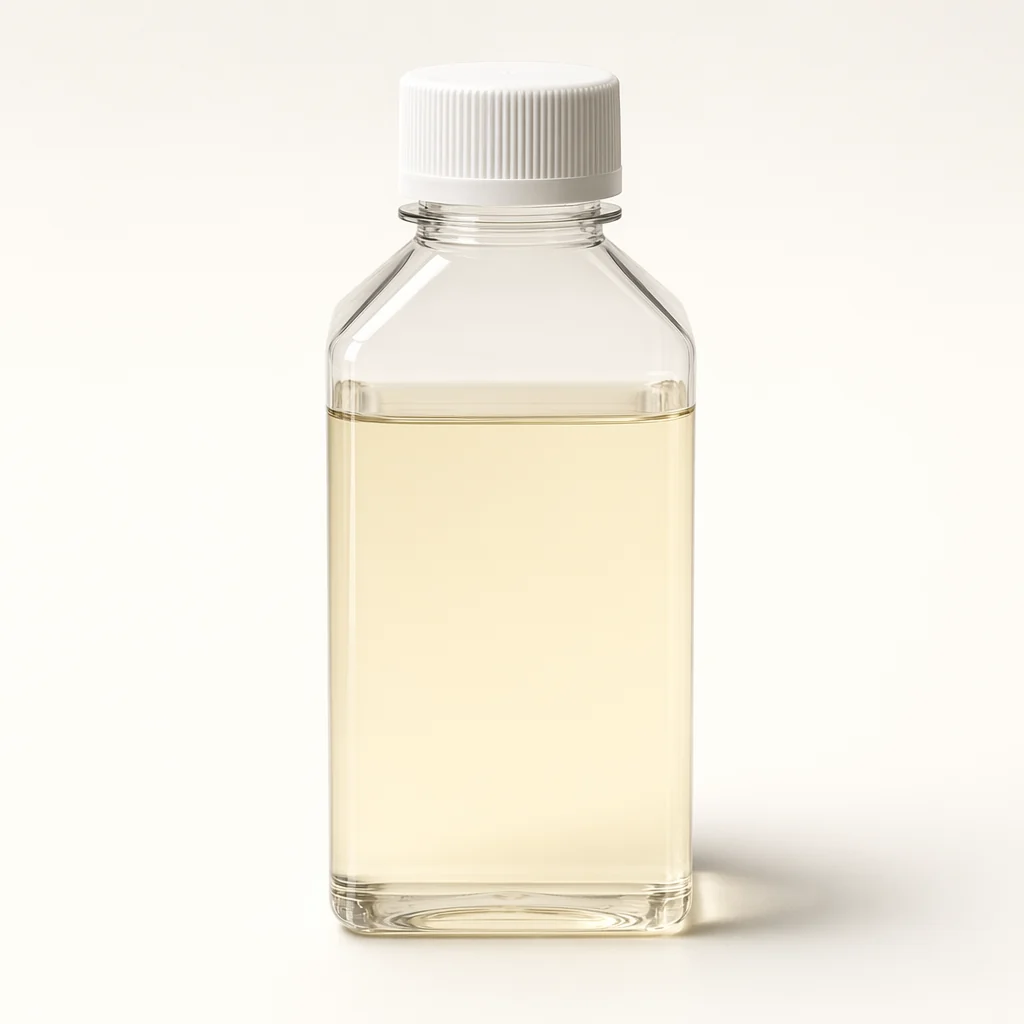
PBS pH 7.2 Without Calcium, Magnesium, Phenol Red
CCM-RG-0007 is a sterile, animal-origin-free phosphate buffered saline solution at pH 7.2, supplied without calcium, magnesium, or phenol red for cell culture workflows. This 500 mL liquid balanced salt solution is designed for rinsing, dilution, and handling steps where divalent cations or pH indicator dyes are not desired. CellCultureMedia supplies this reagent for research and bioprocessing users with shipping quoted per order and procurement support for repeat or bulk orders.
- ✓ Manufacturer base price, shipping quoted per order
- ✓ ISO-aligned manufacturing
- ✓ Certificate of Analysis on request
- ✓ Bulk & custom volumes quoted on request
Overview
CCM-RG-0007 is a ready-to-use phosphate buffered saline formulation for cell culture-related reagent workflows. It is supplied as a clear liquid balanced salt solution with no added calcium ions, no added magnesium ions, and no phenol red. The absence of divalent cations makes it suitable for washing steps prior to dissociation procedures or downstream handling in which calcium- or magnesium-dependent adhesion, aggregation, or reagent activity needs to be minimized. The absence of phenol red supports workflows where colorimetric interference, background signal, or indicator carryover should be avoided.
The product is manufactured as an animal-origin-free reagent and filter sterilized for use in controlled laboratory processes. Key release specifications include pH 7.1–7.3, with a target pH of 7.2, osmolality of 280–320 mOsmol/kg, and endotoxin not more than 1 EU/mL. The formulation is provided in a 500 mL bottle for benchtop cell culture operations, small-scale process development, assay preparation, and routine buffer exchange. For related formulations and accessory reagents, review the cell culture reagents category or request lot-specific documentation before purchase.
Applications
- Rinsing adherent cell monolayers before dissociation, medium change, staining, or sample preparation steps where calcium and magnesium are not required.
- Washing suspension cells, cell pellets, tissue culture inserts, vessels, and process-contact surfaces during laboratory-scale cell handling.
- Preparing cell suspensions, diluting reagents, or equilibrating samples in an isotonic phosphate buffered environment with osmolality specified at 280–320 mOsmol/kg.
- Supporting assays where phenol red is undesirable because of optical readouts, fluorescence background, absorbance monitoring, or downstream analytical sensitivity.
- Use as a general balanced salt solution in mammalian cell culture, academic research, process development, and quality-control sample workflows.
- Routine procurement for laboratories standardizing animal-origin-free ancillary materials with defined sterility, endotoxin, pH, and storage specifications.
Storage and Handling
Store CCM-RG-0007 at 2–30 °C and protect the bottle from light during warehousing and routine laboratory use. The product ships at ambient temperature, which simplifies receiving and internal distribution for multi-site procurement teams. The stated shelf life is 48 months when the bottle is stored unopened under recommended conditions. Use aseptic technique after opening, keep the container closed when not in use, and avoid repeated exposure to non-controlled environments. Do not use if the solution shows visible particulates, turbidity, container damage, or other signs of compromised integrity.
Quality and Documentation
CellCultureMedia supplies CCM-RG-0007 for research, development, and bioprocessing support under ISO-aligned supplier quality practices. Each lot is controlled against defined specifications for sterility by filtration, pH, osmolality, endotoxin, appearance, and fill configuration. A Certificate of Analysis is available on request, and procurement teams may reference the CCM SKU when aligning purchasing records, inventory systems, and incoming quality checks. For documentation expectations, visit our quality resources. Standard orders include shipping quoted per order, and larger recurring requirements can be coordinated through request a quote for volume pricing, forecasted supply, or multi-location delivery planning.
Specifications
Formulation Highlights
Does Not Contain (-)
Phenol red, Ca 2+, Mg 2+
Storage & Handling
Storage: 2~30 ℃, protected from light. Shelf life: 48 months. Ship cold-chain where required.
Quality & Documentation
Manufactured under ISO-aligned quality management systems. Full documentation — Certificate of Analysis (CoA), Material Safety Data Sheet (MSDS), formulation summary, and stability data — is available on request. Email [email protected] with the SKU.
About this product
What cell lines does this product support?
How is this product shipped?
Is a Certificate of Analysis available?
What is the typical lead time?
Do you offer bulk pricing?
Learn more about this
- Counting Cells with a HemocytometerA hemocytometer is a thick glass slide bearing a precisely etched grid over which a coverslip creates a chamber exactly 0.1 mm deep, so that a known volume of cell suspension can be counted under a microscope and converted to a concentration. For mammalian cells you count the four 1 mm2 corner squares, take the mean, multiply by the dilution factor, and multiply by 10^4 to obtain cells per mL, because each corner square encloses exactly 10^-4 mL. Mixing the sample 1:1 with 0.4% trypan blue before loading gives a viability percentage from the same count, since only dead cells with compromised membranes take up the dye.
- ACK lysis bufferACK (Ammonium-Chloride-Potassium) lysis buffer is an isotonic ammonium chloride solution used to remove red blood cells from leukocyte preparations such as mouse spleen, bone marrow and buffy coat. The standard composition is 150 mM ammonium chloride (8.02 g/L NH4Cl), 10 mM potassium bicarbonate (1.0 g/L KHCO3) and 0.1 mM disodium EDTA, adjusted to pH 7.2-7.4. Red cells lyse osmotically within one to five minutes at room temperature because their band 3 anion exchanger and high carbonic anhydrase activity drive ammonium chloride and water into the cell, while leukocytes, which lack that transport capacity, survive.
- PBS vs DPBS: What Is Different, and Which One to UsePBS and DPBS are both phosphate-buffered saline solutions; the difference is the recipe, not the function. Dulbecco's formulation (DPBS) adds potassium chloride and carries roughly twice the phosphate of a typical PBS (about 9.5 mM versus about 4 mM), and it is sold in two versions - with calcium and magnesium, and without. In practice the with-or-without-divalent-cations choice matters far more than the PBS-or-DPBS label: use a calcium- and magnesium-free solution to wash cells before trypsinisation or EDTA dissociation, because Ca2+ and Mg2+ support the cadherin and integrin bonds you are about to break, and use the version containing calcium and magnesium when cells must stay attached and intact through the wash.
- Subculture of Cells (Passaging)Subculture of cells, also called passaging, is the transfer of cells from a culture that is approaching confluence into fresh vessels with fresh medium so that growth can continue. Adherent cells are detached first, usually with 0.25% or 0.05% trypsin-EDTA or a non-enzymatic dissociation reagent, then reseeded at a lower density set by a split ratio such as 1:4; suspension cells are simply diluted into fresh medium without any dissociation step. Most continuous adherent cell lines are subcultured at 70-80% confluence, which normally means two or three passages per week.
- Cell culture buffersCell culture buffers hold medium in the pH 7.2-7.4 range that mammalian cells require, against the acid load cells generate as they metabolise. The default system in almost every classical medium is sodium bicarbonate working with the CO2 in the incubator atmosphere, which is why bicarbonate content must be matched to the incubator setting: about 1.5-2.2 g/L NaHCO3 for 5% CO2 and 3.7 g/L for 10% CO2. Organic buffers such as HEPES (pKa 7.48) are added at 10-25 mM to hold pH when cultures are outside a CO2 atmosphere, while phosphate-buffered solutions such as PBS and DPBS are used for washing and short-term handling rather than for growth.