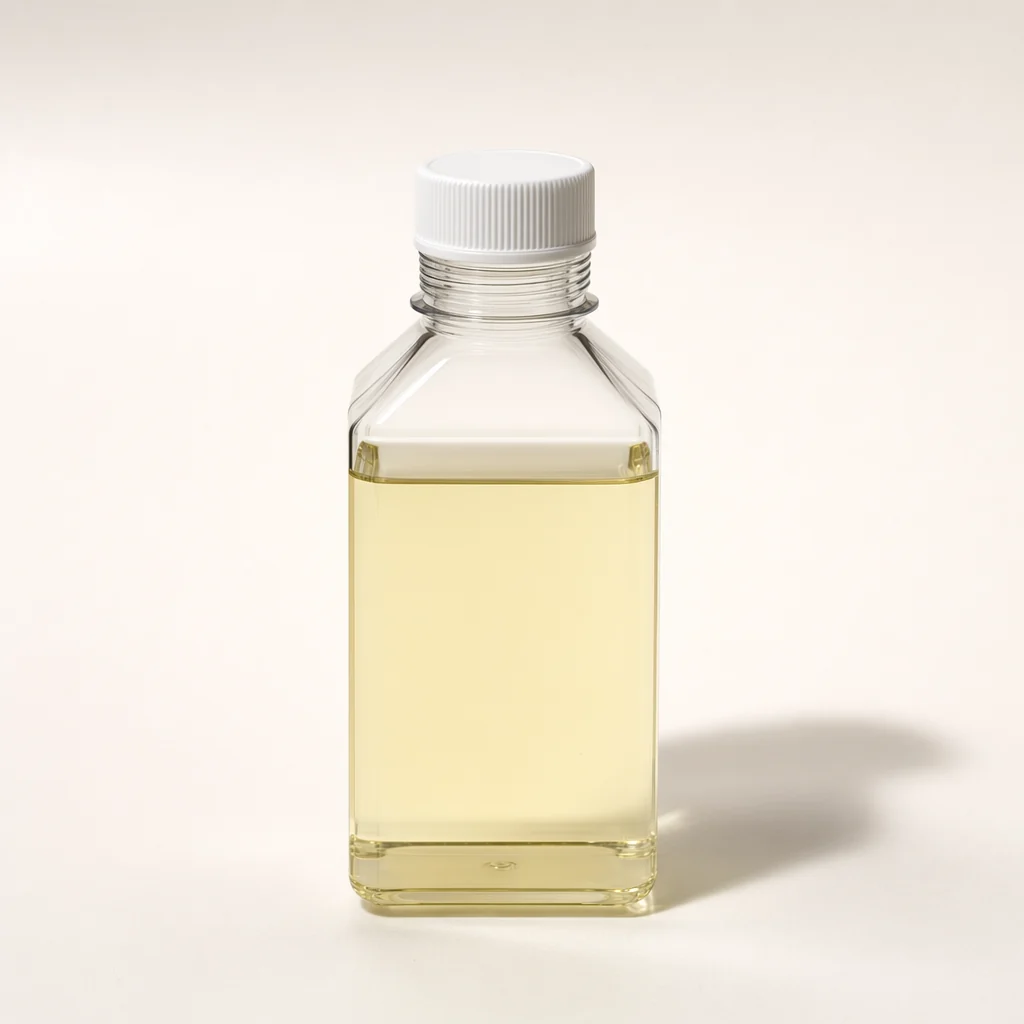
PBS-EDTA Solution, Calcium and Magnesium Free
PBS-EDTA Solution Without Calcium, Magnesium or Phenol Red is a sterile, animal-origin-free balanced salt solution containing 1 mM EDTA for cell culture washing and dissociation workflows. Supplied as a 500 mL liquid under CCM-RG-0009, it is formulated without calcium ions, magnesium ions, or phenol red to support chelation-sensitive handling steps. The product ships at room temperature and is available at USD 19.44 with shipping quoted per order.
- ✓ Manufacturer base price, shipping quoted per order
- ✓ ISO-aligned manufacturing
- ✓ Certificate of Analysis on request
- ✓ Bulk & custom volumes quoted on request
Overview
CCM-RG-0009 is a PBS-EDTA balanced salt solution designed for routine cell culture reagent use in research, development, and bioprocess support laboratories. The formulation includes 1 mM EDTA and excludes phenol red, calcium ions, and magnesium ions. The absence of divalent cations helps reduce cation-dependent cell adhesion during wash steps and supports controlled handling before enzymatic or non-enzymatic dissociation. The phenol red-free composition is useful when visual color indicators are not desired or when downstream optical measurements require a cleaner background.
This product is supplied as a sterile-filtered liquid in a 500 mL format. Key specifications include pH 7.1 to 7.3, osmolality 280 to 320 mOsmol/kg, endotoxin level ≤1 EU/mL, animal-origin-free classification, and a stated shelf life of 48 months when stored as directed. For related buffers, dissociation aids, and washing solutions, procurement teams can review the broader cell culture reagents category. The product is intended for cell culture, R&D, assay preparation, and process development environments where consistent buffer composition and low bioburden risk are required.
Applications
- Washing adherent or suspension cell cultures before passaging, medium exchange, or harvest, especially where calcium and magnesium removal is required.
- Preparing cells for dissociation workflows by reducing divalent-cation-mediated adhesion before the addition of compatible dissociation reagents.
- Rinsing culture vessels, microcarriers, and cell pellets in research or process development workflows that require a phenol red-free balanced salt solution.
- Supporting assay setup where background color from phenol red may interfere with absorbance, fluorescence, imaging, or visual inspection requirements.
- Use in animal-origin-free reagent systems for laboratories documenting material origin, batch consistency, and controlled input specifications.
- Buffering cell handling steps in academic, biotech, and biopharma laboratories that require defined pH range, osmolality range, sterility status, and endotoxin specification.
Storage and Handling
Store CCM-RG-0009 at 2 to 30 °C protected from light. The solution is shipped at room temperature, and the receiving site should place the bottle into approved storage conditions upon receipt. Use aseptic technique when opening and dispensing to preserve sterility over the in-use period. Do not use the product if the container is compromised, if turbidity or visible particulates are observed, or if the solution has been stored outside the validated range for an extended period. For multi-bottle procurement, rotate stock by expiry date and document lot numbers in batch records or laboratory notebooks. The stated shelf life is 48 months under specified storage conditions.
Quality and Documentation
CellCultureMedia supplies CCM-RG-0009 for organizations that require specification-based reagent purchasing and traceable quality documentation. Manufacturing and release processes are ISO-aligned, with sterile filtration, endotoxin specification, pH range, osmolality range, storage conditions, shipping conditions, and shelf-life attributes defined for procurement review. A Certificate of Analysis is available on request, and additional documentation can be coordinated through the quality documentation team. Standard orders include shipping quoted per order, while larger recurring requirements can be quoted through request a quote to align volume, delivery schedule, and documentation needs.
Specifications
Formulation Highlights
Contains (+)
[+]1mM EDTA
Does Not Contain (-)
[-]Phenol Red[-]Ca 2+ [-]Mg 2+
Storage & Handling
Storage: 2~30 ℃, protected from light. Shelf life: 48 months. Ship cold-chain where required.
Quality & Documentation
Manufactured under ISO-aligned quality management systems. Full documentation — Certificate of Analysis (CoA), Material Safety Data Sheet (MSDS), formulation summary, and stability data — is available on request. Email [email protected] with the SKU.
About this product
What cell lines does this product support?
How is this product shipped?
Is a Certificate of Analysis available?
What is the typical lead time?
Do you offer bulk pricing?
Learn more about this
- Trypsin-EDTATrypsin-EDTA is a cell dissociation reagent that combines the serine protease trypsin, which cleaves peptide bonds on the C-terminal side of lysine and arginine residues in cell-surface and matrix proteins, with the chelator EDTA, which binds the calcium and magnesium ions that cell-adhesion molecules require. It is supplied in a calcium- and magnesium-free balanced salt solution, most commonly at 0.05% trypsin (0.5 g/L) for routine cell lines and 0.25% (2.5 g/L) for firmly adherent cells and primary cultures. Typical use is 2-5 minutes at 37 degrees C, followed immediately by neutralisation with serum-containing medium or a defined trypsin inhibitor.
- PBS vs DPBS: What Is Different, and Which One to UsePBS and DPBS are both phosphate-buffered saline solutions; the difference is the recipe, not the function. Dulbecco's formulation (DPBS) adds potassium chloride and carries roughly twice the phosphate of a typical PBS (about 9.5 mM versus about 4 mM), and it is sold in two versions - with calcium and magnesium, and without. In practice the with-or-without-divalent-cations choice matters far more than the PBS-or-DPBS label: use a calcium- and magnesium-free solution to wash cells before trypsinisation or EDTA dissociation, because Ca2+ and Mg2+ support the cadherin and integrin bonds you are about to break, and use the version containing calcium and magnesium when cells must stay attached and intact through the wash.