
DNase/RNase-Free Distilled Water, 500 mL
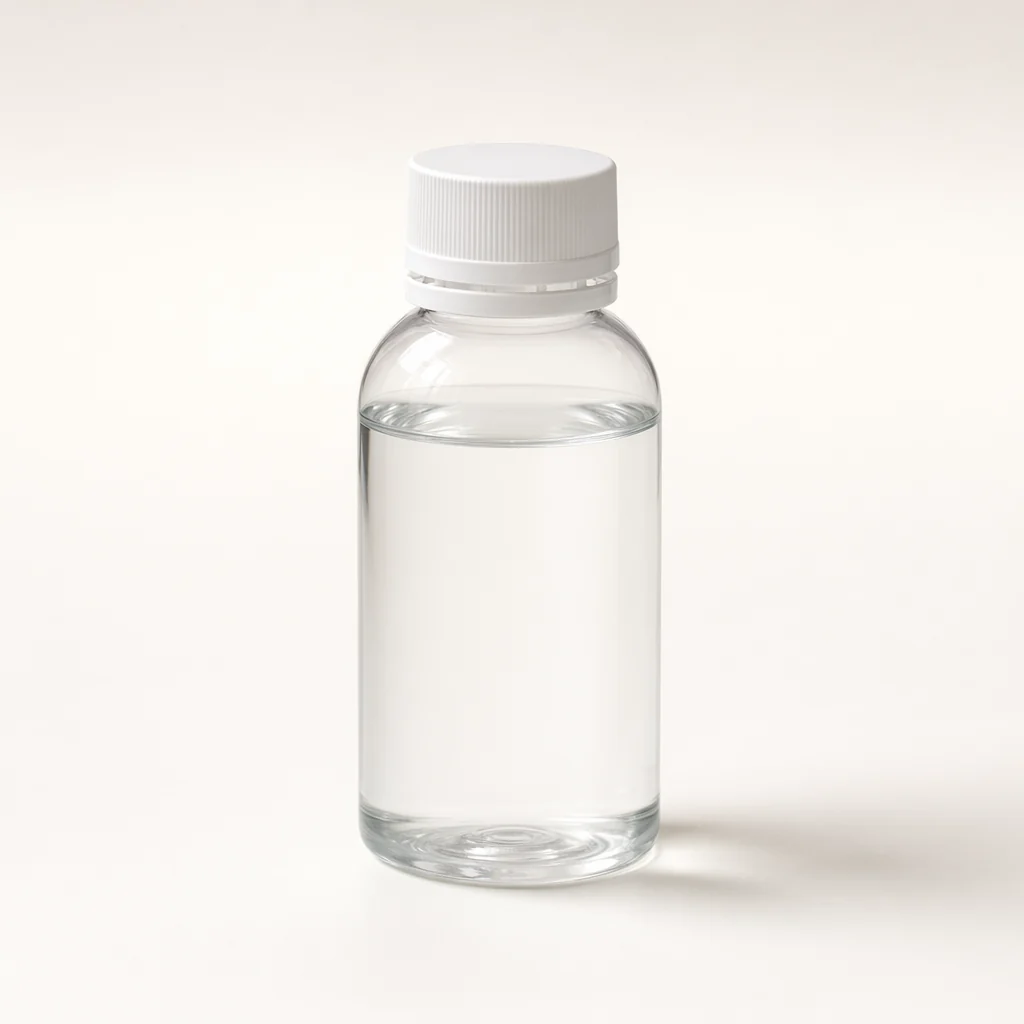
DNase/RNase-free distilled water is animal origin-free purified water supplied for cell culture reagent preparation, molecular workflows, and bioprocess support tasks where nuclease control is required. CCM-RG-0020 is packaged as a 500 mL bottle and specified with pH 5.0–7.0, osmolality 0–5 mOsmol/kg, and endotoxin not more than 5 EU/mL.
- ✓ Wholesale and bulk pricing on request
- ✓ Private-label and OEM packaging quoted on request
- ✓ ISO-aligned manufacturing
- ✓ Certificate of Analysis on request
Wholesale supply terms
- Pack size
- Listed pack: 500 mL. Other pack sizes on request.
- Minimum order
- Minimum order quantities on request
- Bulk format
- Bulk packs quoted on request; ask whether a powder format is available
- Private label / OEM
- Private-label and OEM packaging quoted on request
- Lot reservation
- Lot reservation for repeat supply on request
- Lead time
- Quoted per order
- Documents
- Certificate of Analysis on request
We supply companies that resell to laboratories: distributors, resellers, catalogue companies, marketplaces and private-label buyers. We do not sell single units to individual labs.
Overview
CCM-RG-0020 is DNase/RNase-free distilled water intended for laboratories that require a controlled water source for preparation, dilution, rinsing, and reconstitution steps in cell culture and molecular biology support workflows. It is classified as animal origin-free, making it suitable for procurement programs that restrict animal-derived raw materials in research and process development environments. Supplied in a 500 mL format, it is convenient for shared laboratory benches, media preparation areas, and small-batch reagent production.
The specification profile supports routine use in controlled cell culture operations: pH 5.0–7.0, osmolality 0–5 mOsmol/kg, endotoxin not more than 5 EU/mL, and a 12-month shelf life when stored as directed. These parameters are relevant when water is used in contact with sensitive reagents, serum-free supplements, buffers, and cultureware. For related products used in upstream workflows, see our cell culture reagents category or contact CellCultureMedia for sourcing support.
Applications
- Preparation of cell culture reagent dilutions where DNase/RNase-free water is required by the protocol.
- Reconstitution of powdered or concentrated laboratory reagents used in research cell culture workflows.
- Buffer and rinse solution preparation for non-final formulation process development tasks.
- Support for molecular biology steps adjacent to cell culture, including RNA- or DNA-sensitive sample handling.
- General laboratory water supply for low-osmolality, animal origin-free reagent preparation.
- Small-batch process engineering studies where a documented water input is preferred over unqualified in-house water.
Storage and Handling
Store CCM-RG-0020 at 2–30 °C protected from light. Keep the container tightly closed when not in use and handle with clean laboratory technique to maintain nuclease-free performance after opening. The product ships at room temperature, which simplifies receiving and inventory routing for multi-site procurement teams. Do not use beyond the assigned 12-month shelf life or if the container integrity is compromised. As with all shared laboratory reagents, assign the bottle to a defined work area when possible to reduce cross-use handling risk.
Quality and Documentation
CellCultureMedia supplies CCM-RG-0020 for research, cell culture, and bioprocessing support applications under ISO-aligned supplier quality practices. Lot-specific documentation can confirm applicable release parameters such as pH, osmolality, endotoxin specification, and nuclease-free status. Sterility-related information should be verified on the lot documentation when required for a specific workflow. A Certificate of Analysis is available on request through our quality documentation team. For volume requirements, standing orders, or institutional purchasing, submit a request through request a quote. Shipping is quoted per order and destination; wholesale quantities ship most economically.
What to send for a quotation
- Product and SKU (CCM-RG-0020)
- Pack size (500 mL)
- Quantity per quarter
- Repeat cadence
- Destination country
Terms, minimums and lead time are stated in the written quotation for that order. Private label and lot reservation can be requested; both are quoted per project or order. See the distributor programme for how we work with resellers.
Specifications
Storage and handling
Storage: 2~30 ℃, protected from light. Shelf life: 12 months. Shipped cold-chain where required.
Quality and documentation
Manufactured under ISO-aligned quality management systems. A Certificate of Analysis is available on request: email info@cellculturemedia.bio with the SKU.
About this product
What cell lines does this product support?
How is this product shipped?
Is a Certificate of Analysis available?
What is the typical lead time?
Do you offer bulk pricing?
Learn more about this
- Endotoxin Testing in Cell CultureEndotoxin testing measures bacterial lipopolysaccharide (LPS) in laboratory water, media, sera and reagents, reported in endotoxin units per millilitre (EU/mL), where 1 EU corresponds to roughly 0.1–0.2 ng of reference-standard E. coli endotoxin. The compendial methods are the LAL (limulus amebocyte lysate) assay in its gel-clot, turbidimetric and chromogenic forms under USP <85>, and the animal-free recombinant Factor C (rFC) assay under USP <86>; kinetic formats quantify down to about 0.001–0.005 EU/mL. Practical cell-culture limits are 0.25 EU/mL for water, ≤1 EU/mL for most cell-culture-grade reagents, and ≤10 EU/mL as the general industry standard for fetal bovine serum, with low-endotoxin grades at ≤1 EU/mL and ultra-low grades below 0.1 EU/mL. Endotoxin survives autoclaving and passes 0.2 µm filters, so it must be excluded at source rather than removed later.
- Poly-L-Lysine Coating Protocol for Cell CulturePoly-L-lysine coating covers a culture surface with a positively charged synthetic polymer that binds the negatively charged plasma membrane, allowing weakly adherent cells to attach to glass or plastic. The standard protocol applies a sterile 0.01% (0.1 mg/mL) solution at roughly 1 mL per 25 cm2, leaves it in contact with the surface for 5 minutes to 1 hour at room temperature, aspirates, rinses thoroughly with sterile tissue-culture-grade water, and air-dries the surface for at least 2 hours before cells are seeded. The attachment it provides is purely electrostatic: poly-L-lysine does not engage integrins, so cells that need genuine extracellular matrix signalling require laminin, fibronectin or collagen instead of it or on top of it.
More from Cell Culture Reagents
Request a wholesale quote
We have received your message. We will reply by email.