Ultra-Low Endotoxin Sterile Distilled Water
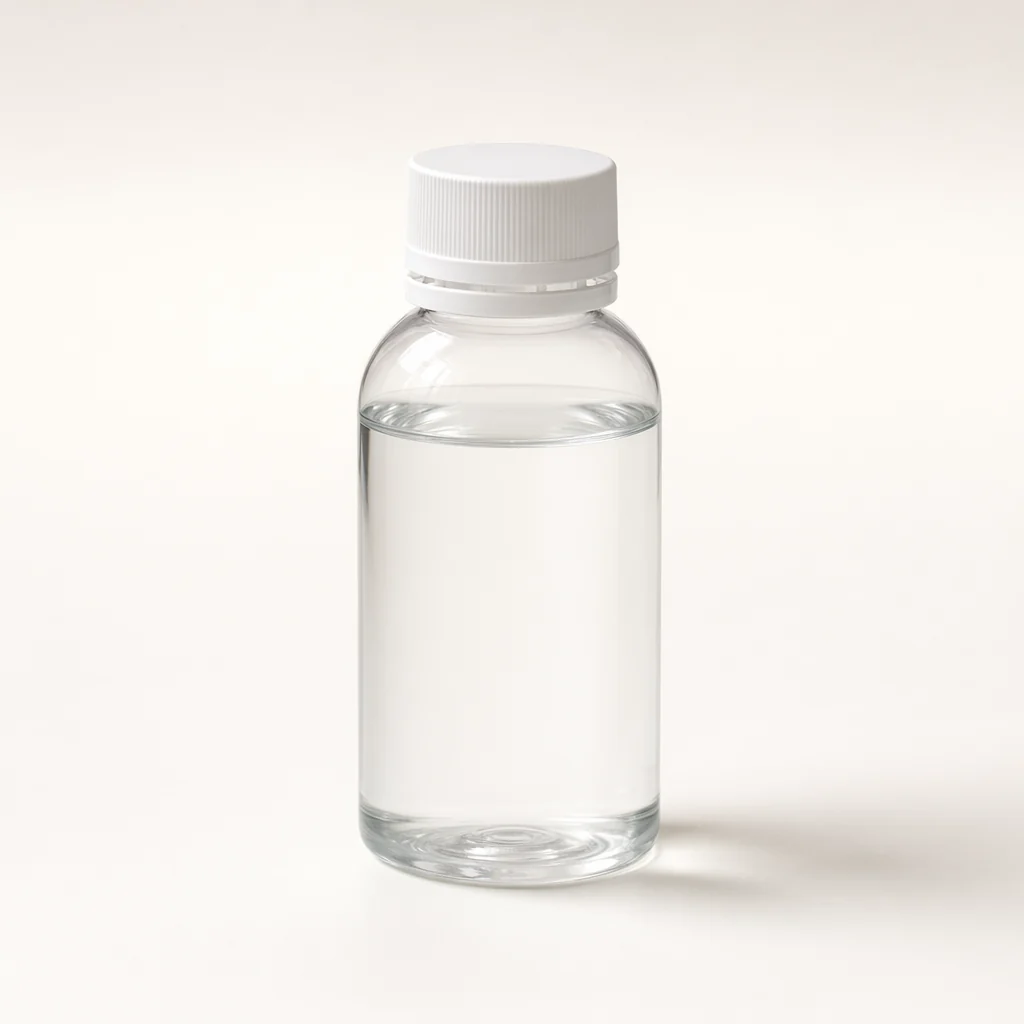
Ultra-low endotoxin sterile distilled water is a cell culture-grade water reagent for preparing, diluting, and rinsing culture-related solutions where low ionic contribution and controlled bioburden are required. CCM-RG-0018 is supplied as a 500 mL liquid, animal-origin-free, filter sterilized, and specified for endotoxin below 0.25 EU/mL. It is suitable for routine laboratory workflows, assay support, and bioprocess development use. CellCultureMedia offers transparent purchasing support, documentation on request, and shipping quoted per order where permitted by destination regulations.
- ✓ Manufacturer base price, shipping quoted per order
- ✓ ISO-aligned manufacturing
- ✓ Certificate of Analysis on request
- ✓ Bulk & custom volumes quoted on request
Overview
CCM-RG-0018 is sterile distilled water manufactured for cell culture reagent workflows. The source title translates as “Ultra-Low Endotoxin Distilled Water, Filter Sterilized, Cell Culture Grade.” The product is supplied in a 500 mL liquid format for laboratories that require a consistent, low-endotoxin water input for media-related preparation, buffer dilution, reagent reconstitution, rinsing of culture-contact accessories, and other research or bioprocess support tasks.
Key specifications include animal-origin-free classification, filter sterility, endotoxin below 0.25 EU/mL, osmolality of 0–20 mOsmol/kg, and pH 5.0–7.0. These parameters make the material appropriate when users need low ionic load, minimal endotoxin background, and a defined quality profile rather than general-purpose laboratory water. The product belongs in the cell culture water segment of our cell culture reagents portfolio and can be ordered as a single bottle or incorporated into recurring reagent supply plans.
Applications
- Preparation or dilution of cell culture-related reagents where low endotoxin input is important to experimental consistency.
- Reconstitution of compatible dry or concentrated laboratory materials according to the user’s validated protocol.
- Rinsing and wetting steps for non-critical culture support items when a sterile, low-osmolality water input is required.
- Research-scale process development workflows that require controlled water specifications for comparative media or buffer studies.
- Academic, biotech, and biopharma laboratory use in cell culture support operations, including upstream process development and analytical sample preparation.
This water is not a complete medium and does not contain salts, amino acids, proteins, serum, growth supplements, buffers, antibiotics, or phenol red. Users should verify compatibility with each formulation, cell type, and process step before routine use. For quotation support, standing orders, or multi-site procurement, submit requirements through Request a Quote with the required pack size, forecast volume, and destination country.
Storage and Handling
Store unopened bottles at 2–30 °C protected from light. The stated shelf life is 24 months when stored under recommended conditions and handled according to standard aseptic laboratory practice. Shipping is at ambient temperature, which supports efficient international logistics without cold-chain handling for this item. After opening, use aseptic technique, minimize repeated bottle exposure, and follow internal laboratory limits for open-container hold time. Do not use the product if the container is damaged, compromised, visibly contaminated, or outside the applicable expiry period.
Quality and Documentation
CellCultureMedia supplies CCM-RG-0018 for research, development, and bioprocessing support environments that require specification-driven purchasing. Production and release are managed under ISO-aligned quality practices, with lot-level controls for sterility status, endotoxin, pH, osmolality, appearance, labeling, and shelf-life assignment. A Certificate of Analysis is available on request, and procurement teams may ask for specification sheets or additional documentation through our Quality page. The current 500 mL list price is USD 9.72, with shipping quoted per order offered for eligible destinations and order configurations.
Specifications
Storage & Handling
Storage: 2~30 ℃, protected from light. Shelf life: 24 months. Ship cold-chain where required.
Quality & Documentation
Manufactured under ISO-aligned quality management systems. Full documentation — Certificate of Analysis (CoA), Material Safety Data Sheet (MSDS), formulation summary, and stability data — is available on request. Email [email protected] with the SKU.
About this product
What cell lines does this product support?
How is this product shipped?
Is a Certificate of Analysis available?
What is the typical lead time?
Do you offer bulk pricing?
Learn more about this
- Cell Culture ContaminationCell culture contamination falls into six categories: bacteria, yeast, filamentous fungi and moulds, mycoplasma, viruses, and cross-contamination by another cell line. Bacteria, yeast and fungi announce themselves within one to five days through turbidity, a pH shift or visible particles under the microscope, and are handled by discarding the culture and finding the technique failure that let them in. Mycoplasma, viral contamination and cell line misidentification produce no visible change at all and are found only by testing — PCR or DNA stain for mycoplasma, STR profiling for identity. The correct response to any confirmed biological contamination is to discard the affected culture, decontaminate the incubator, and restart from a clean frozen stock.
- HEPES buffer in cell cultureHEPES (4-(2-hydroxyethyl)-1-piperazineethanesulfonic acid) is a zwitterionic organic buffer used in cell culture to hold medium at physiological pH without depending on incubator CO2. Its pKa is about 7.5 at 20-25 degrees C and about 7.3 at 37 degrees C, giving useful buffering across roughly pH 6.8-8.2, and it is normally added to medium at 10-25 mM from a sterile 1 M stock. Because HEPES buffering does not rely on the carbonic acid/bicarbonate equilibrium, HEPES-supplemented medium resists the fast alkaline drift that occurs when a flask leaves a 5% CO2 incubator.
- ACK lysis bufferACK (Ammonium-Chloride-Potassium) lysis buffer is an isotonic ammonium chloride solution used to remove red blood cells from leukocyte preparations such as mouse spleen, bone marrow and buffy coat. The standard composition is 150 mM ammonium chloride (8.02 g/L NH4Cl), 10 mM potassium bicarbonate (1.0 g/L KHCO3) and 0.1 mM disodium EDTA, adjusted to pH 7.2-7.4. Red cells lyse osmotically within one to five minutes at room temperature because their band 3 anion exchanger and high carbonic anhydrase activity drive ammonium chloride and water into the cell, while leukocytes, which lack that transport capacity, survive.
- Endotoxin Testing in Cell CultureEndotoxin testing measures bacterial lipopolysaccharide (LPS) in laboratory water, media, sera and reagents, reported in endotoxin units per millilitre (EU/mL), where 1 EU corresponds to roughly 0.1–0.2 ng of reference-standard E. coli endotoxin. The compendial methods are the LAL (limulus amebocyte lysate) assay in its gel-clot, turbidimetric and chromogenic forms under USP <85>, and the animal-free recombinant Factor C (rFC) assay under USP <86>; kinetic formats quantify down to about 0.001–0.005 EU/mL. Practical cell-culture limits are 0.25 EU/mL for water, ≤1 EU/mL for most cell-culture-grade reagents, and ≤10 EU/mL as the general industry standard for fetal bovine serum, with low-endotoxin grades at ≤1 EU/mL and ultra-low grades below 0.1 EU/mL. Endotoxin survives autoclaving and passes 0.2 µm filters, so it must be excluded at source rather than removed later.
- Glucose solution in cell cultureA cell culture glucose solution is a concentrated sterile D-glucose stock, commonly supplied at 300-450 g/L (30-45% w/v), used to supplement basal media and to feed cultures that consume glucose faster than the medium supplies it. D-glucose has a molecular weight of 180.16, so 1 g/L equals 5.55 mM: standard media run from 1 g/L (5.5 mM) in low-glucose DMEM through 2 g/L (11.1 mM) in RPMI 1640 to 4.5 g/L (25 mM) in high-glucose DMEM. Glucose is added to prevent depletion in long or high-density cultures, and it is normally sterile-filtered rather than autoclaved, because heating glucose with amino acids produces browning reaction products.
- Cell culture buffersCell culture buffers hold medium in the pH 7.2-7.4 range that mammalian cells require, against the acid load cells generate as they metabolise. The default system in almost every classical medium is sodium bicarbonate working with the CO2 in the incubator atmosphere, which is why bicarbonate content must be matched to the incubator setting: about 1.5-2.2 g/L NaHCO3 for 5% CO2 and 3.7 g/L for 10% CO2. Organic buffers such as HEPES (pKa 7.48) are added at 10-25 mM to hold pH when cultures are outside a CO2 atmosphere, while phosphate-buffered solutions such as PBS and DPBS are used for washing and short-term handling rather than for growth.
- DispaseDispase, also sold as Dispase II or neutral protease, is a zinc-dependent metalloprotease from Paenibacillus (formerly Bacillus) polymyxa, EC 3.4.24.4, used for gentle tissue dissociation and for detaching cells and epithelial sheets intact. It cleaves fibronectin and type IV collagen, degrades type I collagen only minimally, and does not cleave laminin or type V collagen, which is why it can separate an epidermis from a dermis or lift a confluent epithelial sheet off plastic without destroying cell-cell junctions. Because it is a metalloprotease requiring zinc for catalysis and calcium for stability, it is inhibited by EDTA, EGTA and 1,10-phenanthroline, and it must be diluted in a calcium-containing buffer rather than a chelator-based one.
- Poly-L-Lysine Coating for Cell CulturePoly-L-lysine coating covers a culture surface with a positively charged synthetic polymer that binds the negatively charged plasma membrane, allowing weakly adherent cells to attach to glass or plastic. The standard protocol applies a sterile 0.01% (0.1 mg/mL) solution at roughly 1 mL per 25 cm2, leaves it in contact with the surface for 5 minutes to 1 hour at room temperature, aspirates, rinses thoroughly with sterile tissue-culture-grade water, and air-dries the surface for at least 2 hours before cells are seeded. The attachment it provides is purely electrostatic: poly-L-lysine does not engage integrins, so cells that need genuine extracellular matrix signalling require laminin, fibronectin or collagen instead of it or on top of it.