Chemically Defined Enzyme-Free Cell Dissociation Medium
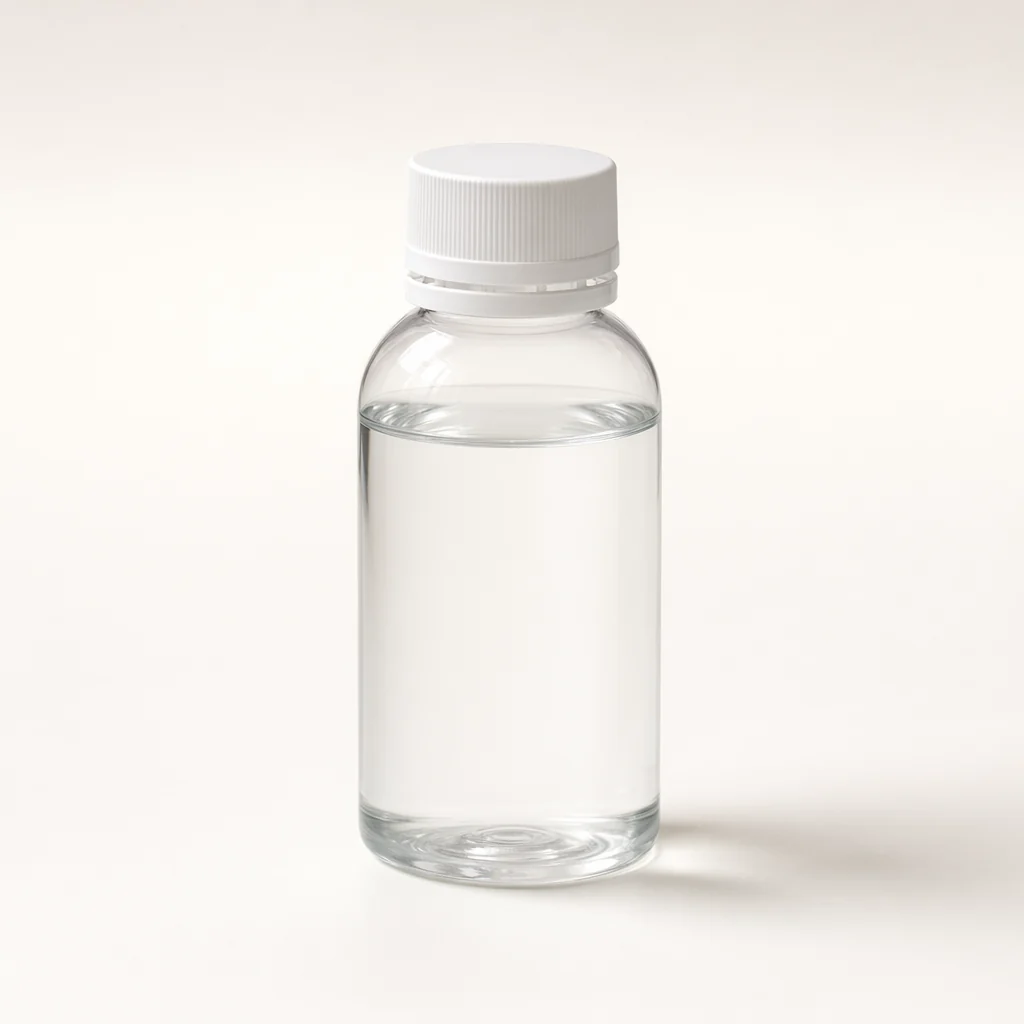
CCM-RG-0049 is a chemically defined, animal origin-free cell dissociation medium for enzyme-free detachment of adherent cells in research and bioprocessing workflows. This 100 mL, sterile-filtered liquid is phenol red-free, contains no digestive enzyme, and is specified at pH 7.0–7.4 with osmolality of 300–380 mOsmol/kg. It is supplied for procurement teams that require defined composition, low endotoxin, and controlled cold-chain logistics, with shipping quoted per order from CellCultureMedia.
- ✓ Manufacturer base price, shipping quoted per order
- ✓ ISO-aligned manufacturing
- ✓ Certificate of Analysis on request
- ✓ Bulk & custom volumes quoted on request
Overview
This chemically defined cell dissociation medium is a ready-to-use liquid reagent for gentle release of adherent cells from culture vessels without phenol red and without digestive enzyme activity. The animal origin-free formulation is intended for laboratories and process groups that want to reduce undefined raw material inputs while maintaining a controlled dissociation step for routine passaging, cell preparation, and scale-up support. The product is supplied as a 100 mL bottle under SKU CCM-RG-0049, with a listed price of $43.89.
Key release specifications include sterile-filtered liquid format, endotoxin ≤1 EU/mL, pH 7.0–7.4, and osmolality of 300–380 mOsmol/kg. The phenol red-free format is useful where colorimetric interference is not desired in downstream measurements or where users prefer a cleaner visual background. For adjacent buffers, supplements, and dissociation products, review our cell culture reagents category or contact the team for lot availability and documentation.
Applications
- Enzyme-free detachment of adherent mammalian cells during routine subculture when users need a chemically defined, animal origin-free reagent.
- Preparation of cells for reseeding, expansion, counting, flow cytometry preparation, imaging workflows, or other research assays where phenol red-free handling is preferred.
- Process development studies that compare dissociation conditions, contact time, recovery, and post-release morphology across defined reagent systems.
- Bioprocessing support for laboratories moving from small culture vessels to multilayer vessels, stirred systems, or closed handling formats, subject to internal qualification.
- Academic, biotechnology, and biopharma R&D settings that require documented sterility, endotoxin, pH, osmolality, shelf-life, and cold-chain parameters for procurement review.
Storage and Handling
Store CCM-RG-0049 at 2–8 °C and protect the bottle from extended room-temperature exposure when not in use. The product ships on blue ice to maintain a refrigerated logistics profile and has a stated shelf life of 24 months when stored unopened under recommended conditions. Use aseptic technique after opening, close the container promptly, and record open-date tracking according to your site procedure. Do not freeze unless an internal stability assessment has been completed by the user. Before use, equilibrate only the required volume to the temperature specified in the validated cell-handling protocol.
Quality and Documentation
CellCultureMedia supplies this dissociation reagent for research and bioprocessing use with procurement-ready specifications: sterile-filtered format, animal origin-free classification, endotoxin limit of ≤1 EU/mL, pH 7.0–7.4, osmolality 300–380 mOsmol/kg, and 24-month shelf life. Manufacturing and release controls are managed under ISO-aligned quality practices, with documentation support available through our quality resources. A Certificate of Analysis can be provided on request for lot-specific review. For forecasted demand, multi-unit orders, or standing supply arrangements, use the request quote form. Shipping is quoted per order and destination; wholesale quantities ship most economically.
Specifications
Formulation Highlights
Does Not Contain (-)
[-]Phenol Red[-]Digestive Enzyme
Storage & Handling
Storage: 2~8 ℃. Shelf life: 24 months. Ship cold-chain where required.
Quality & Documentation
Manufactured under ISO-aligned quality management systems. Full documentation — Certificate of Analysis (CoA), Material Safety Data Sheet (MSDS), formulation summary, and stability data — is available on request. Email [email protected] with the SKU.
About this product
What cell lines does this product support?
How is this product shipped?
Is a Certificate of Analysis available?
What is the typical lead time?
Do you offer bulk pricing?
Learn more about this
- Chemically Defined MediumA chemically defined medium is a cell culture medium in which the identity and concentration of every component is known — no serum, no protein hydrolysates, no undefined extracts. It may still contain proteins, provided they are recombinant and of known sequence and concentration, which is why chemically defined and protein-free are distinct categories rather than synonyms. Chemically defined media eliminate the lot-to-lot variability, adventitious agent risk and regulatory burden of serum, and are the standard for biopharmaceutical production in CHO, HEK293 and hybridoma systems.
- Counting Cells with a HemocytometerA hemocytometer is a thick glass slide bearing a precisely etched grid over which a coverslip creates a chamber exactly 0.1 mm deep, so that a known volume of cell suspension can be counted under a microscope and converted to a concentration. For mammalian cells you count the four 1 mm2 corner squares, take the mean, multiply by the dilution factor, and multiply by 10^4 to obtain cells per mL, because each corner square encloses exactly 10^-4 mL. Mixing the sample 1:1 with 0.4% trypan blue before loading gives a viability percentage from the same count, since only dead cells with compromised membranes take up the dye.
- Trypsin-EDTATrypsin-EDTA is a cell dissociation reagent that combines the serine protease trypsin, which cleaves peptide bonds on the C-terminal side of lysine and arginine residues in cell-surface and matrix proteins, with the chelator EDTA, which binds the calcium and magnesium ions that cell-adhesion molecules require. It is supplied in a calcium- and magnesium-free balanced salt solution, most commonly at 0.05% trypsin (0.5 g/L) for routine cell lines and 0.25% (2.5 g/L) for firmly adherent cells and primary cultures. Typical use is 2-5 minutes at 37 degrees C, followed immediately by neutralisation with serum-containing medium or a defined trypsin inhibitor.
- Subculture of Cells (Passaging)Subculture of cells, also called passaging, is the transfer of cells from a culture that is approaching confluence into fresh vessels with fresh medium so that growth can continue. Adherent cells are detached first, usually with 0.25% or 0.05% trypsin-EDTA or a non-enzymatic dissociation reagent, then reseeded at a lower density set by a split ratio such as 1:4; suspension cells are simply diluted into fresh medium without any dissociation step. Most continuous adherent cell lines are subcultured at 70-80% confluence, which normally means two or three passages per week.
- Trypsin vs Accutase: Choosing a Cell Dissociation ReagentTrypsin is a pancreatic serine protease that cleaves peptide bonds after lysine and arginine, and it detaches cells fast but indiscriminately - it must be stopped with serum or a trypsin inhibitor, and it cleaves surface proteins along with the adhesion contacts. Accutase is a proprietary mixture of proteolytic and collagenolytic enzymes from an invertebrate source, supplied in calcium- and magnesium-free DPBS with 0.5 mM EDTA; it works more slowly and gently, does not require a neutralisation step, and preserves more surface epitopes. Choose trypsin for routine passaging of robust adherent lines where speed matters and the cells go straight back into culture; choose Accutase when the harvested cells are the experiment - flow cytometry on surface markers, pluripotent stem cells, primary neurons, or any single-cell suspension where viability and phenotype must survive the harvest.
- Poly-L-Lysine Coating for Cell CulturePoly-L-lysine coating covers a culture surface with a positively charged synthetic polymer that binds the negatively charged plasma membrane, allowing weakly adherent cells to attach to glass or plastic. The standard protocol applies a sterile 0.01% (0.1 mg/mL) solution at roughly 1 mL per 25 cm2, leaves it in contact with the surface for 5 minutes to 1 hour at room temperature, aspirates, rinses thoroughly with sterile tissue-culture-grade water, and air-dries the surface for at least 2 hours before cells are seeded. The attachment it provides is purely electrostatic: poly-L-lysine does not engage integrins, so cells that need genuine extracellular matrix signalling require laminin, fibronectin or collagen instead of it or on top of it.